

table of contents
- What is Numbered?
- SHIFTBRAIN's Art Director's Top Picks from Numbered
- Numbered Manufacturing
- Breaking away from the heyday of flash animation. Shifting from "something entertaining" to "brand growth."
- We don't need the "Numbered style." The reason we continue to challenge ourselves in different industries.
- I don't read the briefs that are provided. Eliminating "likes and dislikes" in design.
- Complete departure by 18 PM. Building an organization without compromise.
- Client work is all about "human relationships."
- Voices of the visiting members
- Conclusion
- After the series ended
What is Numbered?
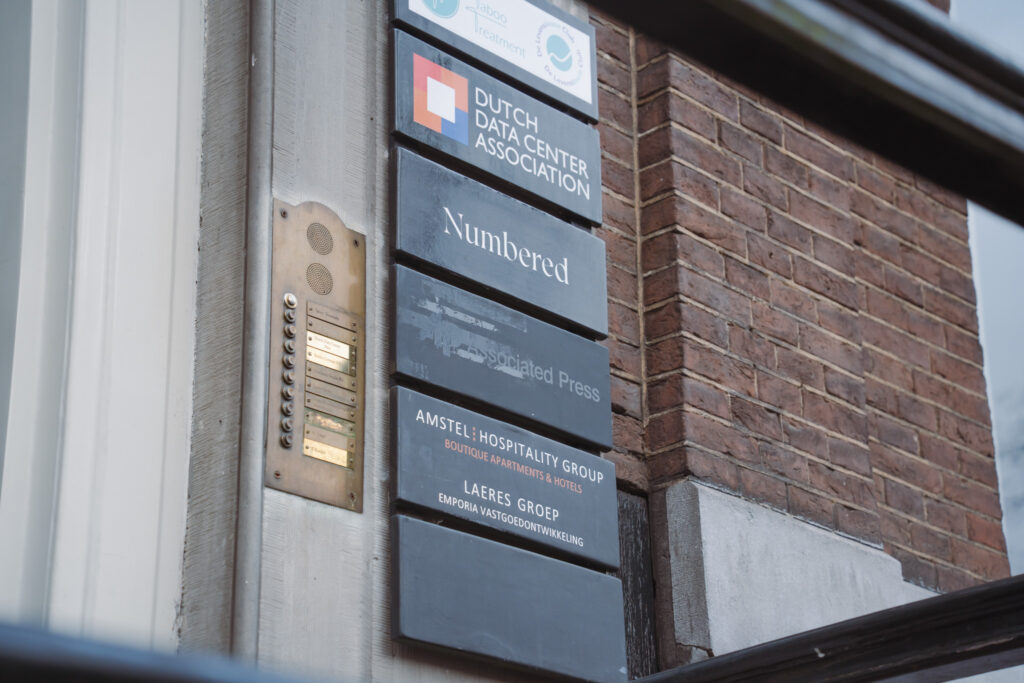
Numbered is a global creative agency that handles everything from brand strategy and design to content creation and photography, primarily in the luxury, fashion, and beauty sectors, for clients such as Chanel, Dom Pérignon, Sézane, Ladurée, and Vacheron Constantin.
What's distinctive is that they view e-commerce as the core of the brand experience. They span brand strategy, art direction, CG/3D, and Shopify, building the optimal digital experience for each brand. While one might imagine a uniform process when thinking about e-commerce site creation, they assemble a team structure and approach tailored to each brand, designing a consistent brand world from UI design to the purchase experience.
SHIFTBRAIN's Art Director's Top Picks from Numbered
Case 1:Dom Pérignon
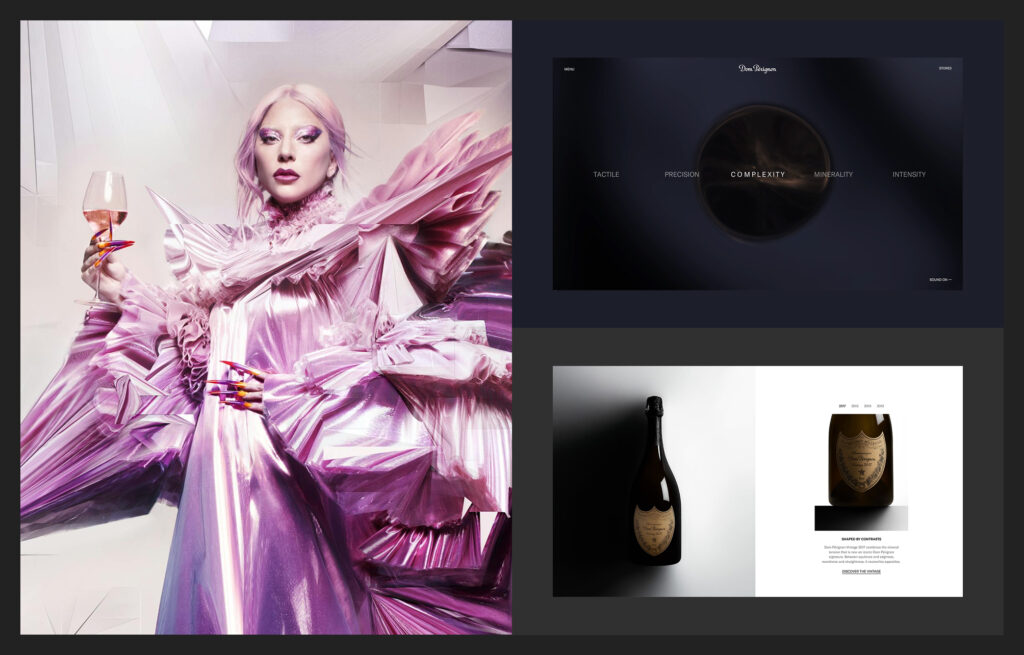
When purchasing a luxury car, you likely first connect with the brand's philosophy and values before making your selection. This case is very similar; the entire website is designed to convey the brand's philosophy—including creativity, time, and aesthetics—as an experiential tool, rather than simply showcasing product specifications and lineups.
Furthermore, I believe the conversion on this site isn't about making a purchase, but rather about users confirming where they can buy the products. Of course, since it's an e-commerce site, products are placed directly below the first view on the top page, but after that, the content unfolds in a way that feels more like appreciating a work of art, rather than simply listing product information.
Visually, none of the elements—photography, video, typography, whitespace, or motion—overpower the other; instead, each is designed with exquisite balance, simultaneously creating a sense of tranquility and tension. The scrolling and transitions are never flashy, but this restrained presentation further highlights the brand's prestige and creates an air of relaxed elegance befitting a luxury brand.
What was particularly impressive was how content conveying the brand's philosophy, such as "Aesthetic Ideal" and "Creation is an Eternal Journey," plays a significant role, treating it with the same importance as the products themselves. The experience begins by introducing the brand's values and philosophy, and then naturally leads to an interest in the products, making it more of an experience of understanding the brand than simply learning about the products.
As a result, the overall experience design of the site is structured to allow users to gradually understand the brand's worldview and cultivate feelings toward purchase. The amount of information is not overwhelming, but rather than rushing to sell products, the focus is on first making users like the brand. I felt that the greatest appeal of this site is how consistently this philosophy is expressed digitally.
Case 2:Damso
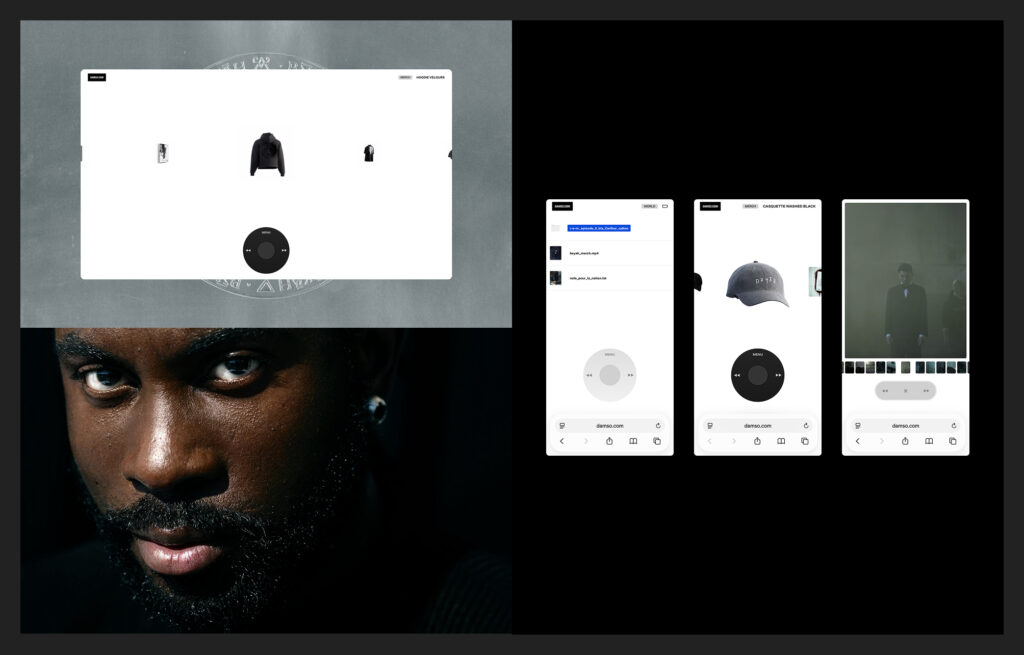
This is the official website of rapper Damso. When you open the site, an interface appears that feels like you're operating an iPod, allowing you to browse the content as if you were touching a music player. While there's no explicit explanation for this UI, it feels like a design that reinterprets the experience of listening to music itself on the web, rather than simply creating a distinctive look. Rather than just browsing the site, my own experience was closer to the feeling I had in middle and high school when I borrowed a friend's iPod and dug for new music, and I was naturally drawn into the world of the site while feeling a sense of nostalgia.
On the other hand, looking at the content on the top page, it gives the impression of being more like an e-commerce site for a cutting-edge apparel brand than an artist's official website. However, I felt that the real focus is not the products, but the worldview and culture that the artist Damso embodies. On this site, the content that would normally be the product detail pages is kept to the bare minimum of information, and items such as T-shirts and hoodies are positioned not merely as products, but as part of owning the world of Damso. Considering this, I felt that this site does not put e-commerce functionality as its main focus, but rather naturally integrates the purchasing experience as an extension of the brand experience, thereby maintaining a sense of immersion in the world of Damso until the very end.
Up to this point, I've been looking at this site from a creative director's perspective, but the UI design is also very interesting. While it has an iPod-like interface, the control buttons at the bottom of the screen morph and seamlessly change shape when you click the selection button in the center, making it not only visually interesting but also pleasant to use. Also, on the "World" page, the entire screen switches to a desktop-like UI, and here too, the content is deliberately kept to a minimum. Clicking a folder opens an Apple-like image viewer, and the design is consistent down to the smallest detail, with the UI itself functioning as part of the content, which was very impressive.
Numbered Manufacturing
The person we spoke with this time was Martin, the founder and executive creative director.
Breaking away from the heyday of flash animation. Shifting from "something entertaining" to "brand growth."
First, please tell us about your career and the origins of Numbered.
I started my freelance career as a designer when I was 16. When I joined an agency in Paris in my early twenties, it was the height of Flash's popularity. It was a very free and crazy time, with huge budgets being used to create "cool and interactive things" without clear goals or data analysis.
However, with the rise of mobile devices, the era of Flash came to an end, and the nature of the web changed dramatically. A clear ROI (Return on Investment) of "1 euro invested, 3 euros recovered" became essential.
Therefore, we made a major shift from simply creating interactive websites to "building and supporting brand growth." Currently, we offer a full range of services, including not only website creation but also strategy, branding, content creation, and e-commerce.
We don't need the "Numbered style." The reason we continue to challenge ourselves in different industries.
Your company's portfolio is comprised of an astonishingly wide range of industries.
From the very beginning, I strongly felt that we didn't want to have a specific style. I don't want people who see our site to be able to identify it as something created by Numbered. That's because what we want to prove is that we can solve any problem, in any industry.
Previously, I helped launch a fashion brand called Sézane, which became a huge success in France. As a result, I was flooded with requests from the fashion industry, but I felt it was "always the same recipe," so I started turning them down. Next, after successfully launching the beauty brand Typology, I started receiving requests almost exclusively from the beauty industry.
That's why I'm now consciously venturing into completely different categories, such as sports cars, deep tech, and neuroscience. I don't have a driver's license, but I'm in charge of a multi-million dollar hypercar project, and now I consider myself quite the expert in that world (laughs).

I don't read the briefs that are provided. Eliminating "likes and dislikes" in design.
What is the most important process you consider when moving a project forward?
This is a "discovery session" where we gather all of the client's top management. Actually, we don't delve too deeply into the briefs the client prepares beforehand. In this day and age, such materials are often created by AI, and therefore don't reveal much about their true nature.
What we want to know is their own way of speaking and how they convey emotions. By engaging in direct conversation, we share information, including financial status and technology, as if we were their employees.
Do you ever have disagreements with clients when proposing designs?
Design is subjective, so I think discussions about "I like this color, I don't like that color" are completely meaningless. What's important is "what the target audience of that brand likes."
In meetings, we use a psychological approach to understand the situation each person is in. When opinions clash, it's usually due to external pressure or anxiety. That's why we focus on reassuring them by logically presenting the "ideal state" based on the product's characteristics and business objectives, rather than simply saying, "This design is cool."
Complete departure by 18 PM. Building an organization without compromise.
Please share your secrets to consistently producing such high-quality output.
At our company, there is absolutely no overtime. We finish work completely at 18 PM, and we never work on weekends.
When I started my career in Paris, I was living a grueling life, working until 4 a.m. That's a bad part of the French industry culture. That's why, when I started my own company, I was determined never to let my employees work like that.
Instead, we are extremely focused during working hours. Designers always have 3 to 5 projects going on simultaneously, and if they get stuck on one project, they immediately switch their focus to another—a process called "task switching." Eliminating time spent staring at the screen and worrying, and always approaching creative work with a fresh mind, is the secret to producing overwhelming speed and quality.
Client work is all about "human relationships."
Finally, could you tell us about your future prospects and your criteria for accepting work?
We don't do any sales or advertising. All of our work comes from referrals. We value relationships above all else. That's why, if we don't feel a "good fit in terms of relationships" during the initial meeting, we'll decline the job no matter how large the budget is. A project that isn't enjoyable is a nightmare for everyone involved.
Furthermore, our policy is to provide the same quality regardless of the budget. Sometimes we even accept projects "almost for free," and conversely, we refuse requests from industries that contradict our philosophy, no matter how high the compensation.
We are currently seeing an increase in clients in the United States, and we are considering establishing a US office in the future. As work styles and cultures become more diverse, we want to continue to maintain our curiosity and take on new challenges in the world.
Voices of the visiting members
Ishizuka (Art Director / Designer)
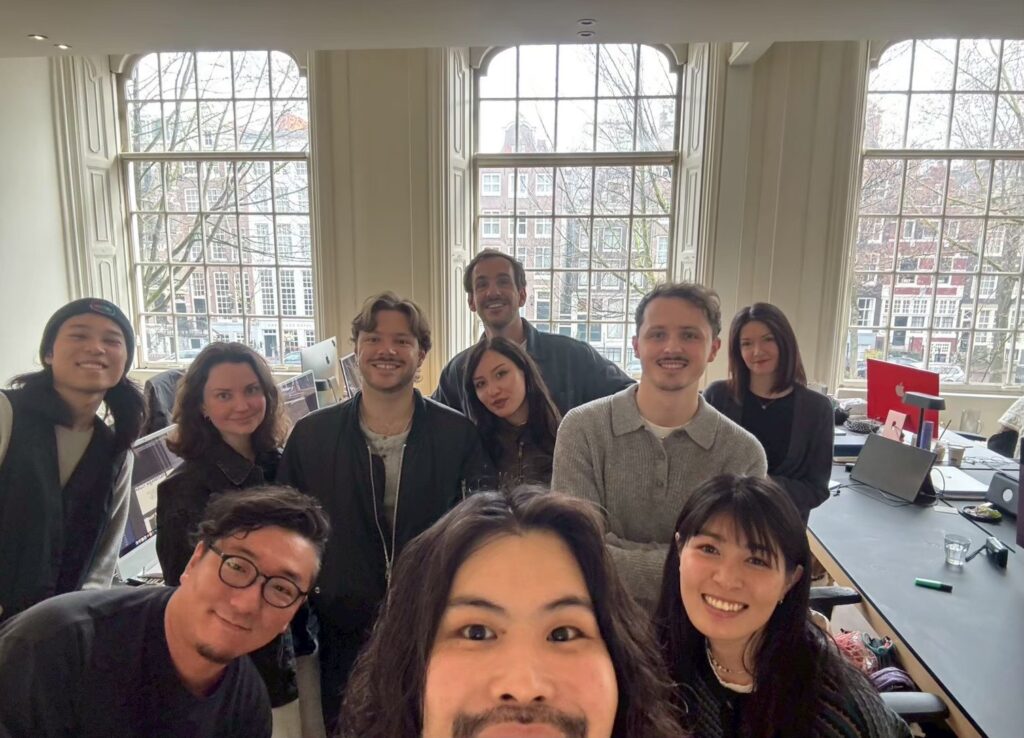
The first thing I noticed upon arriving at the office was the grandeur of the space. It's an office housed in a building in Amsterdam's old town, and it had a completely different atmosphere from other design studio offices. Filippo from Adoratorio also mentioned that the office is the face of the company, and Numbered's office exuded a coolness and dignity that reflected their design work.
What particularly impressed me during our conversation was how much importance they place on who they work with. While working with a wide range of clients, from well-known large corporations to startups, they prioritize compatibility over scale when accepting projects. I felt that this unwavering philosophy is what creates an environment where they can consistently produce high-quality creative work.
They described juggling multiple projects simultaneously, but I believe this is possible not only because of their meticulous project management and creative skills, but also because they value their relationships with clients. It's this trust with clients that allows them to work together with a good balance, enabling the team to focus on their creative work. I felt that this accumulation of experiences leads to high-quality output. It was a very insightful time, as I learned not only about design but also about creating an environment conducive to producing great creative work.
Kin (Motion Designer)
What particularly impressed me was their strong emphasis on compatibility with clients. For projects prone to problems or those where the client focuses too much on details from the initial stages and fails to grasp the big picture, they make an effort to identify such clients as early as possible and refuse to take on projects they deem difficult. This stance was thoroughly implemented. Furthermore, in cases where a representative acts as an intermediary between the studio and the decision-maker, they anticipate potential interactions in advance, taking into account the representative's psychology (such as wanting to be approved by the decision-maker), to ensure smooth communication—a method I learned a lot from. On the creative side, their flexibility was also impressive; they actively incorporate AI to address cost constraints and proactively invest in projects in new fields to expand their portfolio.
Okada (Producer)
What particularly resonated with me about Numbered's story was how much importance they place on compatibility with their clients.
As a company grows, it becomes increasingly difficult to allocate resources to each project and to balance creativity with business viability. In this context, I was very impressed by their approach of carefully determining, not just by intuition, what kind of clients they should work with and what kind of people are a good fit for them.
I found it particularly interesting that they incorporate psychological perspectives to assess compatibility with clients and use that information to decide whether or not to accept a project. We ourselves feel the importance of client compatibility and the difficulty of making that judgment on a daily basis. That's why I strongly empathize with their approach of not leaving it ambiguous, but continuously considering it as an organization and translating it into actual decision-making. Because it's such a difficult thing to do, I honestly think their commitment to doing so is admirable.
Another thing that left a lasting impression on me was Martin's attitude. I personally really liked his stance during the photoshoot, which was something like, "It's okay if I'm not in the photos."
As a company representative, you often find yourself stepping forward as the face of the company. However, in Martin's case, I got the impression that he values showcasing the atmosphere of the team, the office, and the members, rather than standing out himself.
I think their philosophy is that they want people to see the "company" or "team" itself, rather than just "the individual." I felt that this natural sense of distance and the way they choose what to put forward reflects the unique character of Numbered as a company, and I honestly thought it was really cool.
Tsuboi (Project Manager)
What impressed me most during our conversation was how much they value relationships with people. They talked about psychology, placed a lot of importance on compatibility with clients, and even acquired projects solely through referrals. More than anything else, I felt that this company values "who they work with" above all else. If they told me that we had good chemistry, I think I could confidently proceed with the project together.
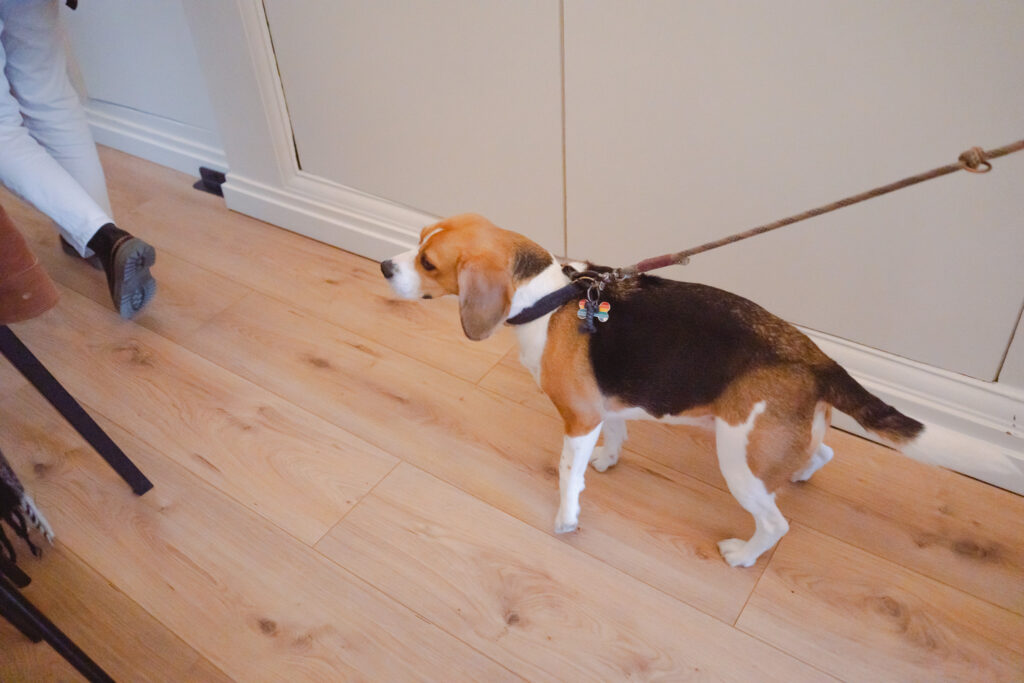
Also, I was impressed that the office dog's name was "Tokyo." It was really cute.
Conclusion
Before focusing on the "beauty of design," they first deeply understand "people" and define the "ideal state" of their business. Their attitude of not relying on a specific style and constantly challenging themselves in new areas can be said to be an ideal model for a creative agency in today's rapidly changing world. Believing in the creativity of human hands and continuing to produce uncompromising quality in a fair working environment, we will be keeping a close eye on their next developments.
After the series ended
Over the course of eight installments, we visited design studios and creative teams overseas to hear about their approaches to product development and how their teams function.
Each studio had a different organizational structure, areas of expertise, and project management methods. However, what I felt was common throughout these visits was that excellent creativity does not come from individual talent alone.
Each studio was creating its own environment for continuously producing high-quality work, in its own way: team relationships for generating ideas, systems to maintain quality, investment in exploring new forms of expression, and a clear sense of what they valued.
The various inspirations and lessons we gained this time have given us an opportunity to reconsider our own approach to manufacturing and teamwork. We would like to transform these into something unique to SHIFTBRAIN in future projects and team building.
SHIFTBRAIN will continue to expand its collaborations and exchanges with creators and studios not only in Japan but also overseas, aiming to become a more globally active team. We will cherish the connections we made in the Netherlands and use them to develop new projects and challenges, while continuing to explore the possibilities of creativity ourselves.
Thank you for reading all eight installments!


