

table of contents
- What is Build in Amsterdam?
- SHIFTBRAIN's Art Director's Top Picks for Build in Amsterdam
- Build in Amsterdam manufacturing
- Creating an e-commerce experience that "sells stories too."
- The production process is built around a central concept.
- A production system where design and development are integrated.
- Designers discuss directly with clients without involving a project manager.
- The team strengthens bonds through daily lunches prepared by the chef.
- Voices of the visiting members
- Conclusion
What is Build in Amsterdam?
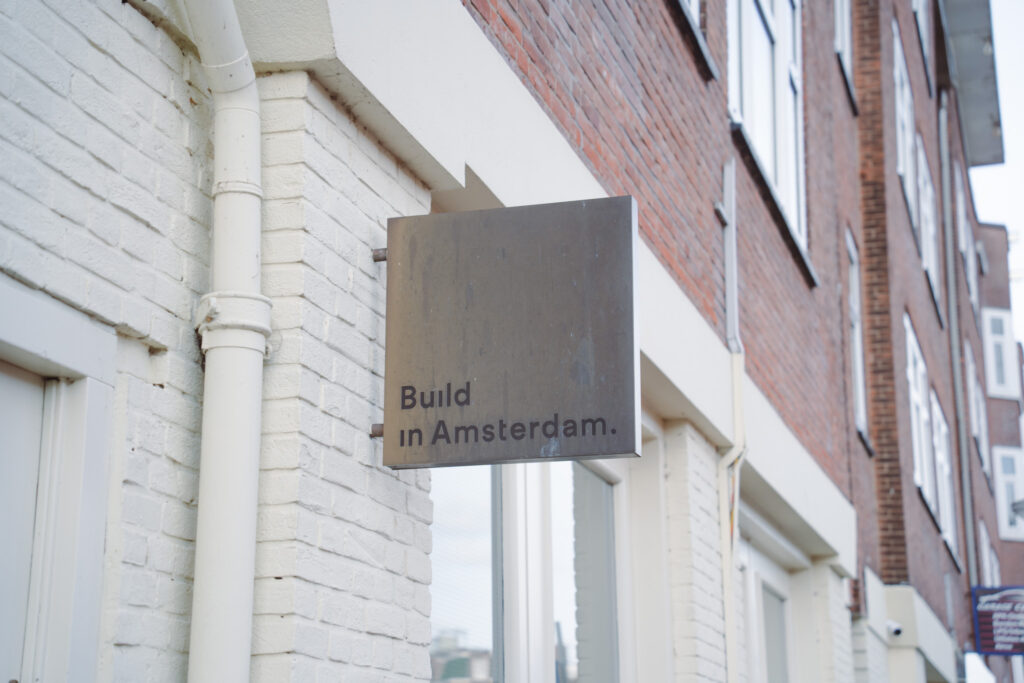
Build in Amsterdam is a branding agency that has created numerous globally acclaimed digital commerce experiences for brands such as Polaroid, Adidas, and Vitra. They create digital experiences that seamlessly blend brand stories with results-oriented shopping experiences.
Their defining characteristic lies in their approach of building a "digital flagship" as the sole channel a brand can fully own. This flagship integrates the brand's story, data, and purchasing experience into a single system. At its heart is a design system that defines how the brand looks, how it behaves, and how it expands, ensuring a consistent brand experience across all touchpoints.
More recently, we've further strengthened our e-commerce capabilities through a partnership with Front Row. Build in Amsterdam designed the flagship store and design system, and Front Row will deploy that system across the broader commerce ecosystem, including marketplaces, retail media, and CRM. This ensures a consistent brand experience wherever customers interact with the brand.
They are highly regarded globally for their creative work, having won Site of the Year and eCommerce Site of the Year awards from Awwwards, as well as numerous other international design awards such as the Webby Awards and the Red Dot Design Award. They are known as one of the leading creative studios in the e-commerce field.
SHIFTBRAIN's Art Director's Top Picks for Build in Amsterdam
Case 1:Vitra
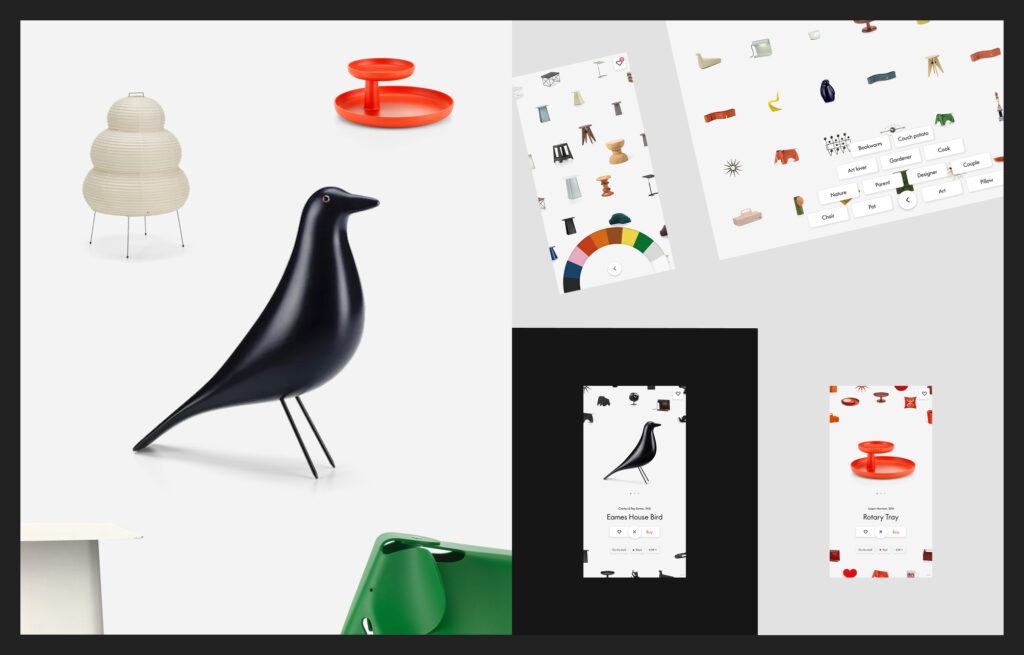
Typical gift websites are often designed around the product axis, focusing on "what kind of product can you give, and for how much?", resulting in an experience that follows the established theories of e-commerce. This site, however, is unique in that it doesn't search by category or price, but rather narrows down products starting with questions like "what kind of things do you like?" or "what colors do you like?".
Instead of simply comparing and searching for products from a list, Vitra elevates the gift-giving process itself into a brand experience by designing the selection process while thinking of the recipient. I was very impressed by how Vitra creates a sense of exclusivity and excitement solely through experience design, without relying on flashy displays or visuals.
Furthermore, the technical aspects and UI design are exceptionally well-executed. Despite handling over 200 products, the smooth operation, effective use of white space in the layout, and lively animations prevent the user from feeling overwhelmed by the sheer volume of information.
By minimizing modals and page transitions, and creating an experience that feels like wandering through a single space, we've created a comfortable feeling of exploring a space. This site was launched four years ago, but I still vividly remember the feeling I had when I first experienced it.
Case 2:Polaroid
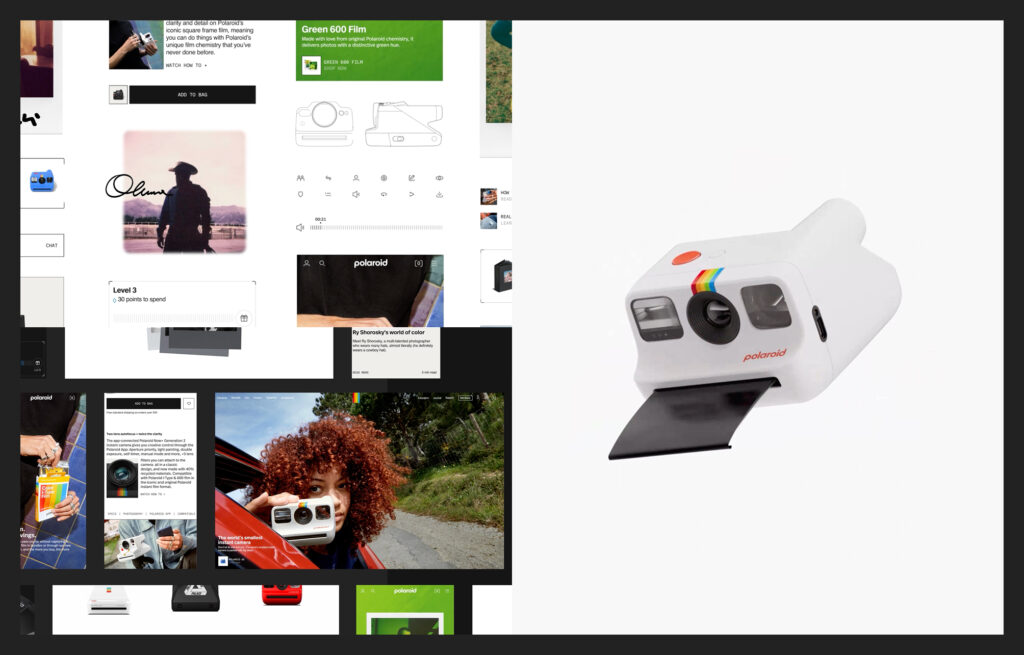
What's striking about Polaroid's website is how it conveys the essence of Polaroid even before you see their products.
While adhering firmly to the principles of e-commerce sites, the design naturally evokes the brand's atmosphere. Focusing on the top page, the layout utilizes white space, two types of sans-serif fonts, ruled lines, a clean color scheme, and product photos. These elements are carefully combined to create a brand experience that feels tangible despite being digital.
Furthermore, the product pages don't just list specifications; they also showcase actual usage scenarios and shooting methods, using both photos and videos. This design goes beyond simply asking "what to buy" and includes an understanding of "how to enjoy" the product.
On the other hand, there is also interactive content, but it is located on a dedicated page ( https://i2-camera.polaroid.com/ ) rather than on the main e-commerce site. The e-commerce site minimizes the use of visual effects, limiting movement to videos that convey the appeal of the products. Meanwhile, the brand experience is delivered thoroughly through the dedicated content. By clearly separating these roles, I felt that the site allows users to naturally experience the world of Polaroid without sacrificing ease of use.
Build in Amsterdam manufacturing
We spoke with Jerrie, Associate Creative Director, and Emile, Designer.
Creating an e-commerce experience that "sells stories too."
I understand that you currently specialize in e-commerce. What kind of approach do you take in your production process?
Jerrie: Currently, our main focus is e-commerce. We consider a brand's website to be a "digital flagship." It's a crucial point of contact that the brand can manage itself, like Nike or Apple's flagship stores in the physical world. It's not just about selling products, but about conveying the brand's worldview and story, and naturally leading to a purchase. What we aim for is not just selling products, but letting people experience the brand itself.
Therefore, we're not aiming to create something unique or unusual. Rather, we prioritize ensuring that customers feel the same brand identity across various platforms where the brand interacts, such as websites, social media, and advertising. We believe that consistency in appearance, language, and the overall impression the brand conveys creates an emotional connection with customers, which in turn leads to long-term brand loyalty.
Furthermore, about a year ago, we joined the Front Row Group. This allowed us to expand beyond our design expertise to encompass a wider range of e-commerce-related areas, including logistics, operations, and data analysis. We now cover how the brand looks across various platforms, such as Amazon marketplaces, retail media, and CRM. Front Row and we divide roles, leveraging each other's strengths. Build in Amsterdam creates the brand's direction and design system, and Front Row deploys it across various sales channels. This ensures that customers experience a consistent brand experience no matter where they interact with the brand.
The production process is built around a central concept.
Could you tell us about your specific project management methods and the particular aspects of your design process?
Jerrie: Our project is basically divided into four stages: Foundation, Idea, Expression, and Delivery. In the first stage, Foundation, we define what the brand values, the environment in which it exists, and the role that platforms such as websites should play within that environment. We organize various pieces of information, such as market analysis, stakeholder feedback, and brand positioning, and bring them together into a single strategic direction. What's important here is not only deciding "what to do," but also "what not to do." By sharing clear principles at the initial stage, we can make consistent decisions throughout the project without relying on personal preferences or subjective opinions.
Our strategy development differs slightly from typical brand strategies because we place a greater emphasis on a more creative perspective. We consider a wide range of factors, from where the brand wants to go, what position it should take in the market, to what we can learn from completely different industries. To achieve this, we don't just talk to management; we also interview sales and marketing personnel, and even customers who are fans of the brand. We gather opinions from people in various positions before defining the essence of the brand.
Emile: From there, we move on to the "Idea" stage. Here, we translate the strategy defined in the Foundation stage into a concrete concept. We consider what kind of experience it will be, what it will be able to do, and how users will experience the site. We don't start out thinking, "Let's create something unique that no one else has." We believe that if we thoroughly explore the concept, originality will naturally emerge as a result.
Then, in the "Expression" stage, the brand takes shape as an actual design. Using various elements such as typography, interface patterns, motion, and photography, we consistently express the ideas that have been decided up to that point. One of the characteristics of our process is that we do not decide on a direction by showing only a mood board. Images without context can be interpreted differently by different clients, which can lead to unnecessary misunderstandings. Therefore, once the direction is clear, we start actual design production as early as possible. Then, we communicate our ideas by showing concrete visuals.
A production system where design and development are integrated.
Could you tell us about the unique production system that is characteristic of Build in Amsterdam?
Based on the belief that "UX is greatly influenced by appearance," we do not separate design and UX. All designers are involved from the creation of wireframes and participate in projects from a design perspective from the information architecture stage. Wireframes are not just layouts, but blueprints that determine the user experience. That's why we value the fact that designers themselves draw the wireframes.
Furthermore, since we don't have a dedicated motion designer, the interactions are conceived collaboratively by designers and developers from the initial stages, shaping them through a back-and-forth between design and implementation. This production system allows us to create a consistent brand experience where visuals and movement are seamlessly integrated.
Furthermore, what the entire studio values most is consistency in the quality of its output. Without being bound by existing methods, we actively incorporate new production flows, tools, and technologies, constantly seeking better forms of expression.
Designers discuss directly with clients without involving a project manager.
Are there any specific things you keep in mind when receiving feedback or communicating with clients?
In the Netherlands, it's common to be frank, and flattering clients or being vague with feedback is actually considered rude. Therefore, when it comes to revisions and feedback, we have designers and developers communicate directly with clients, rather than going through the project manager (PM). This allows for immediate and stimulating discussion about how to improve the product, preventing misunderstandings caused by miscommunication.
Furthermore, no matter how beautiful a website is, if the photos and videos are poor, the overall quality of the site will suffer. For this reason, even for international projects such as those for Dr. Martens, our art directors travel directly to shooting locations in London and Paris to provide direction without compromise.
The team strengthens bonds through daily lunches prepared by the chef.
Finally, could you tell us about your team culture and office environment?
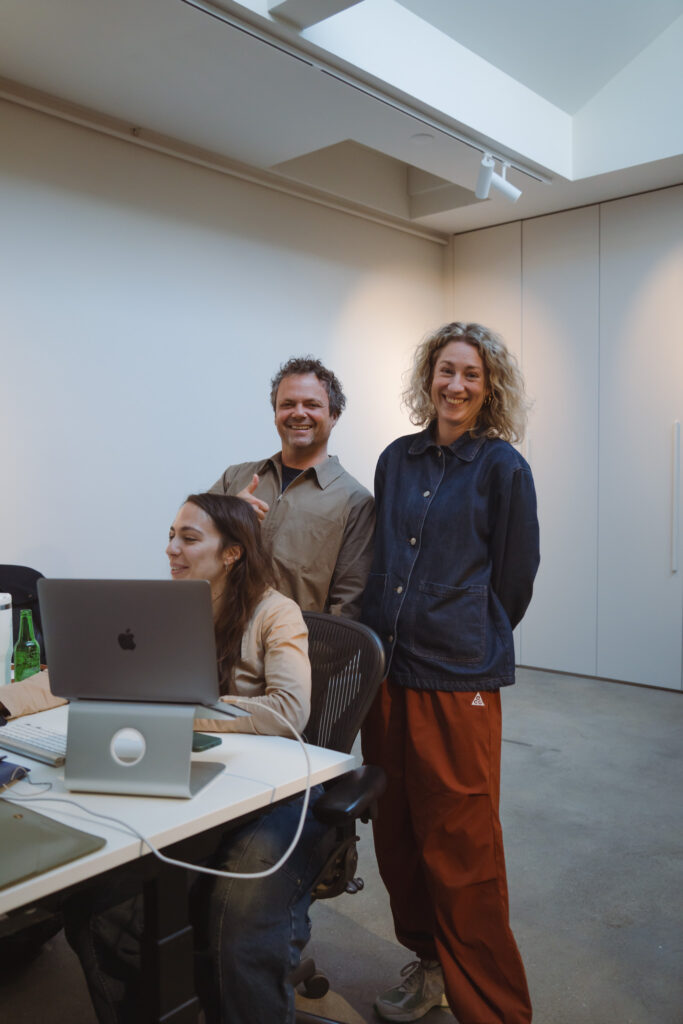
Our office is located not in a business district, but in a quiet residential area. Natural light streams in through the skylight, and we've furnished it with home-style furniture, creating a warm, "home-like" space to soothe digital fatigue.
What we value most is having a dedicated chef prepare a warm lunch every day, which the entire team eats together. We believe that having strong connections with colleagues is crucial for creating great work. We also have a flat organizational structure, and we have a system in place to nurture talented young people into junior designers, allowing them to participate in actual projects from the internship stage, through a "buddy" system and quarterly reviews.
Voices of the visiting members
Ishizuka (Art Director / Designer)
The last place I visited on this business trip was Build in Amsterdam.
What I felt was significantly different from other studios was the atmosphere of the office. The spacious, open-plan layout felt both open and calm, creating a comfortable environment where you could naturally concentrate. Rather than the stoic tension often associated with design studios, there was a gentle and refined atmosphere, and I felt that the space itself reflected the values of this studio.
Furthermore, the sheer number of awards displayed on the walls was spectacular. It was far more than any other studio I had visited, and it was immediately clear that they had been receiving worldwide acclaim for many years. I thought I understood how impressive it was intellectually, but seeing it in person left me speechless. On the other hand, despite having such a distinguished record, there was absolutely no sense of them boasting about it; it was all so naturally integrated into their everyday environment, which I found incredibly cool.
What particularly impressed me during the interview was their approach of creating "truly good products" rather than simply "unique products." Instead of chasing trends or novel expressions, they carefully build upon the essential values for their brand. I felt that this approach is the reason why they continue to be chosen by brands all over the world.
Kin (Motion Designer)
The first thing that caught my eye when I visited the office was the wall adorned with the numerous awards the company had received. I was amazed by the sheer number of awards they had won, and it left a lasting impression on me.
Furthermore, I learned a great deal about how they utilize internships to cultivate talent that can contribute to the company in the future, and about their efforts to efficiently and effectively carry out production, such as having designers create wireframes themselves.
Furthermore, I found the company's lunch provision system very appealing. I felt it not only fosters deeper communication within teams but also motivates employees to come to the office. I thought it was a very attractive initiative, especially for SB, where remote work is the norm.
Okada (Producer)
Of all the agencies I visited this time, I was particularly impressed by the office design.
The entrance hall was lined with awards they had received, such as "Site of the Day" and "Site of the Month," which immediately raised my spirits. Furthermore, the open space extending from the kitchen was also very impressive, and I felt it was a really great office where ease of work and openness were naturally combined.
Another thing I personally found interesting in the interview was their understanding of "strategy." Rather than a general business strategy, they seemed to place more emphasis on what the brand should be, what kind of impression it should give, and what kind of worldview and position it should build. I think their approach to strategy is more creative than purely business-oriented.
Another thing that impressed me was their approach to talent development. Because they themselves have a very unique production style and culture, I felt that simply hiring experienced professionals who can hit the ground running wouldn't always fit their methods. Therefore, they accept young people from the internship stage and take the time to teach them their way of thinking and production methods. I feel that this kind of training system is still not very common, especially among creative agencies in Japan.
While it seems that cutting-edge agencies often rely on experienced mid-career hires who can hit the ground running, I felt that their approach of instilling and nurturing their unique methods from a young age is extremely important for passing on the organization's individuality.
Tsuboi (Project Manager)
Of all the studios I visited this time, this was my personal favorite office. It was a calm space like a hotel lobby, and I honestly felt envious, wishing I could work in a place like this every day.
I was also impressed by their philosophy of "not trying to create something unique, but creating something truly good." Their approach of building upon what is truly valuable to the brand, rather than pursuing flashiness or eccentricity, resonated with our own way of thinking and we found it very relatable. Furthermore, their commitment to this philosophy, working with clients worldwide, and consistently winning numerous awards was very compelling. It's amazing how their dedication to creating high-quality products has led to such recognition.
Conclusion
Listening to Build in Amsterdam, I felt that they are not just a company that builds e-commerce sites, but rather a company that designs "brand experiences." From strategy to design and development, every decision is centered around "brand identity," and this way of thinking is consistently reflected in their output. Their goal is not to create a convenient e-commerce site, but to create an emotional connection between the brand and the user. This approach is very insightful for thinking about future e-commerce production.
Next time we look forward to!


