

table of contents
- Principal's address: There are 9 courses in one year, and approximately 100 people are involved.
- Episode Talk: Part 1
- Interaction Time: Learning that was previously one-way becomes two-way.
- Episode Talk: Part 2
- Crosstalk: What's the difference between teaching subordinates and teaching students?
- Closing remarks: Why "Master" instead of "Teacher"?
"There are way too many official photographers!"
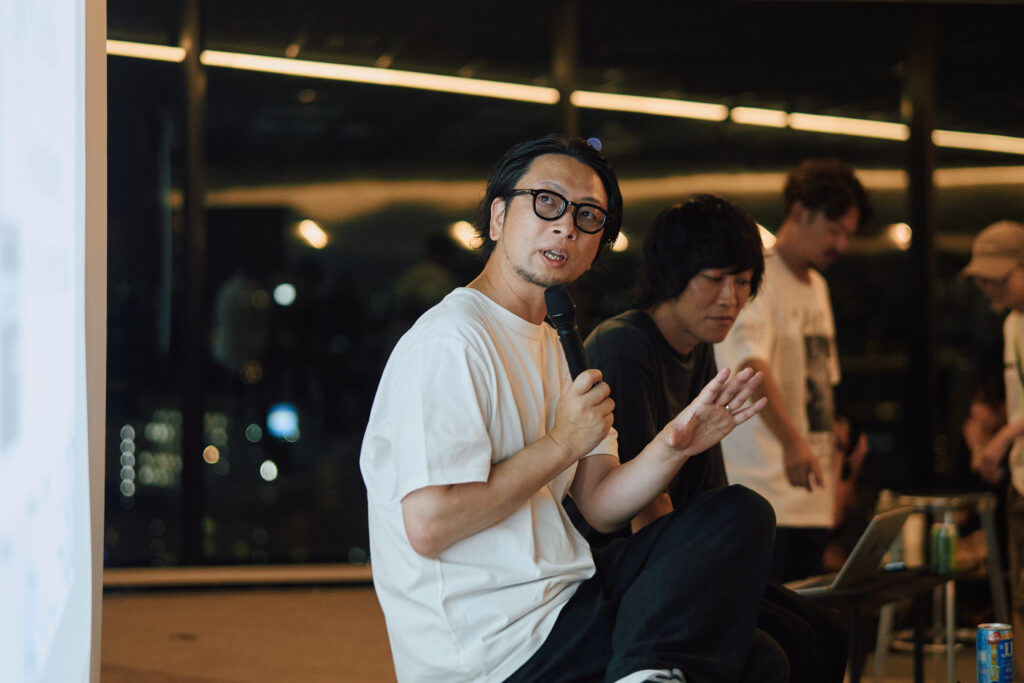
Sunny's Hara-san said that as the first half of the talk session reached its climax. The two of them were moving around at the front of the venue, and I was at the back. It's true that it might be too many people for the size of the event.
"There's Tom over there, who took our photo direction course. He's known as the industry's public relations person, and we'll have him write a report on this event."
It was Principal Nakamura. What exactly is public relations in this industry? It felt both helpful and like there was no escape. I felt like I heard him say, "Please do it as soon as possible."
Once again, I'm Tom Ishikawa, the industry's public relations representative (?).
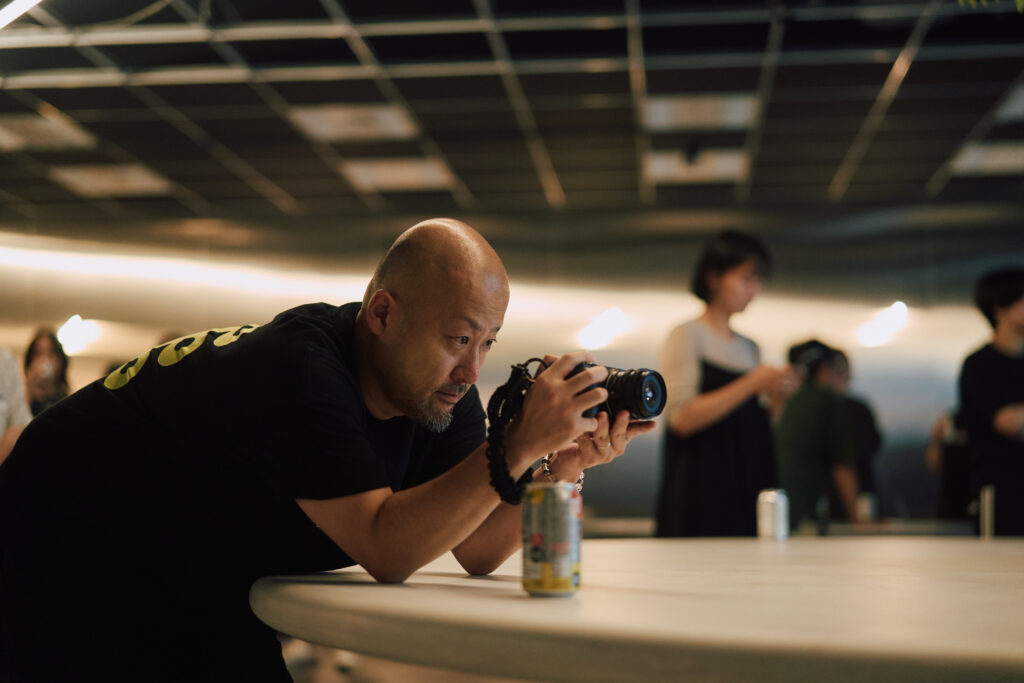
I've been involved in recruitment and career support in the creative industry for about 20 years, and now I also take photographs and write. Today I participated as a student and official reporter for CREATIVE CLASS.
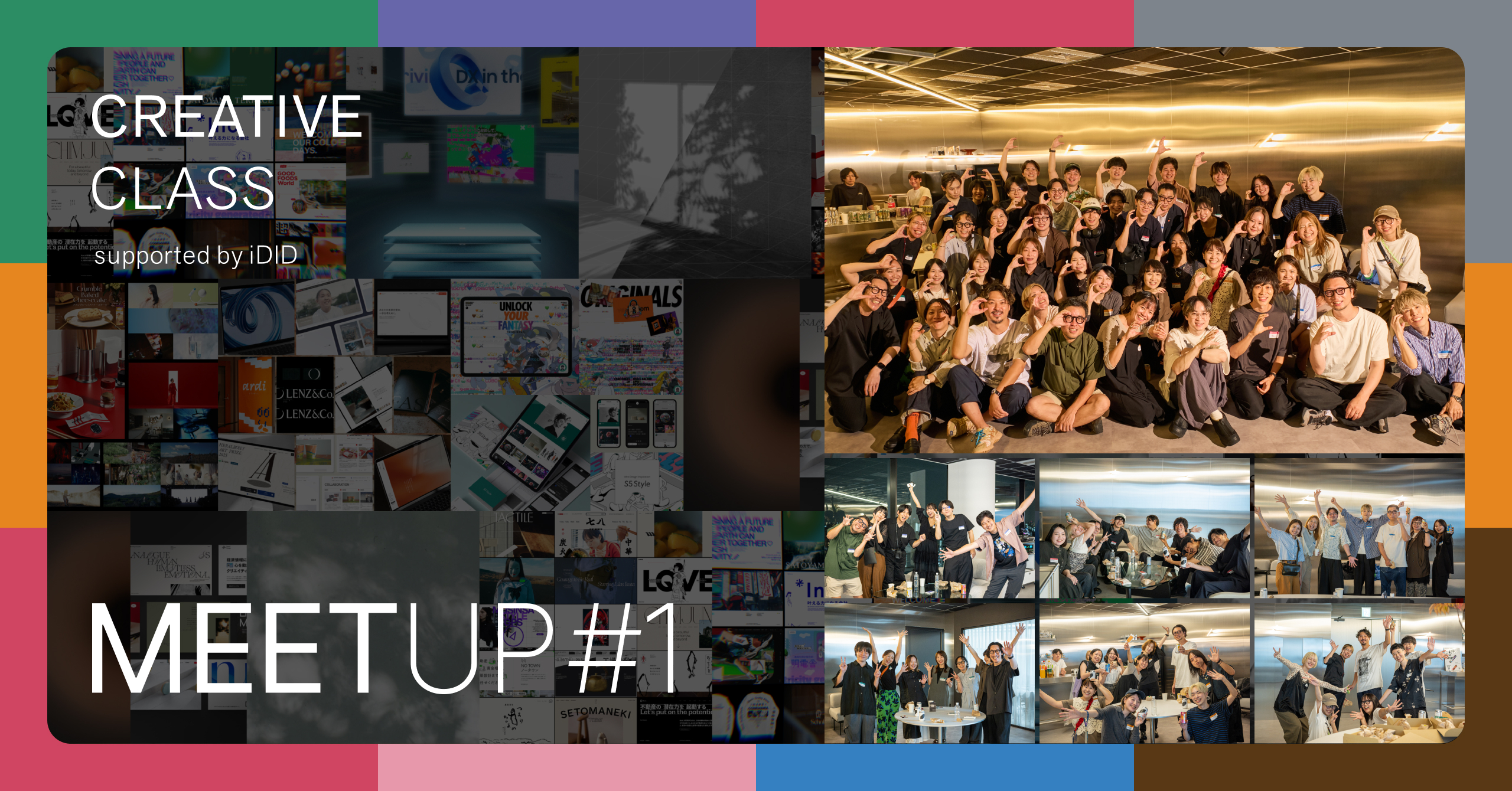
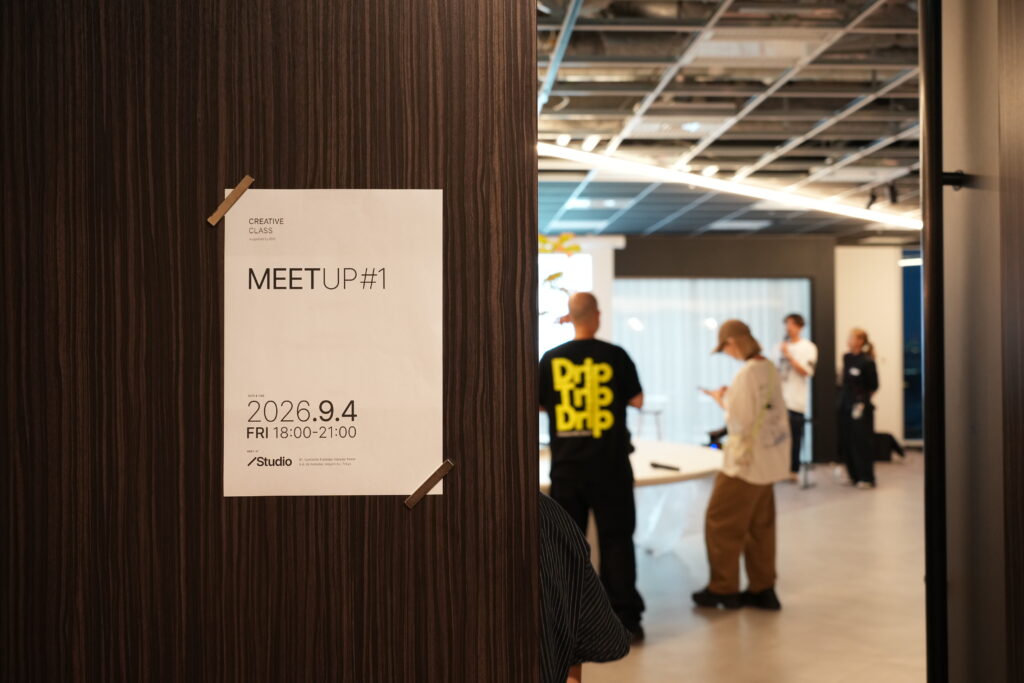
September 4, 2026. Students of CREATIVE CLASS gathered at Studio's office in Aobadai. It was "CREATIVE CLASS MEETUP #1." One year after the course began, it was the first time that the masters who had completed the course and the students had all come together.
There were nine masters, and eight of them gathered at the venue. There were probably around 50 students.
To be honest, before heading to the venue that day, the image I had in mind was "the day I was going to meet the person I admired."
Those called "masters" stand at the front, and those being taught listen from a distance. I myself am still struggling with the challenges of creating a photobook. It will be a gathering where we listen to the stories of those far away, from afar.
What was actually there was a little different.
Principal's address: There are 9 courses in one year, and approximately 100 people are involved.
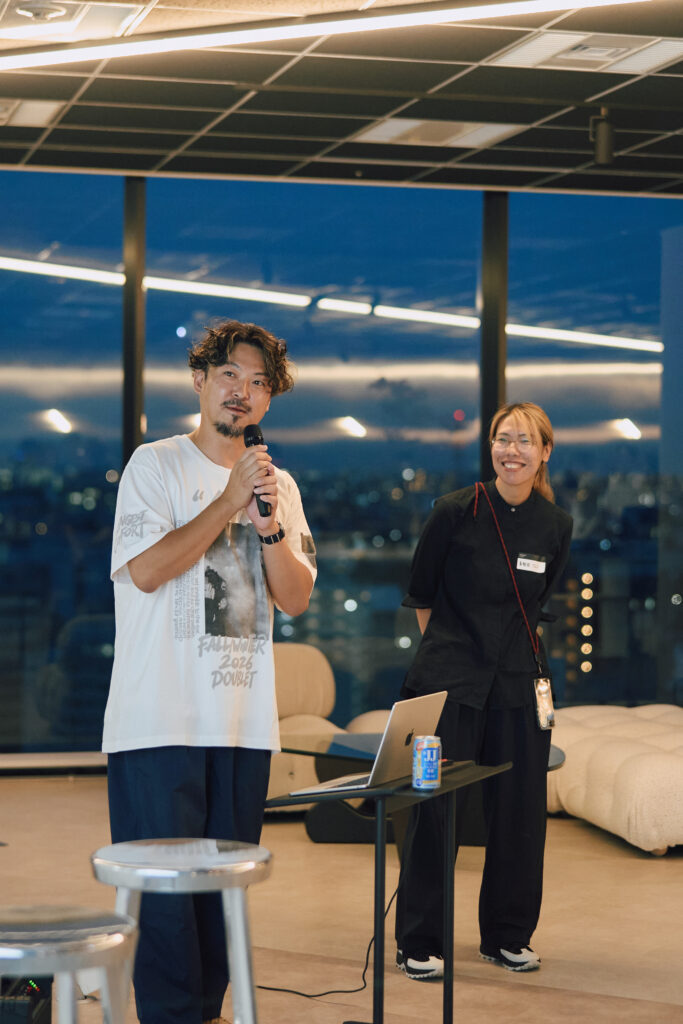
"Even though it's called a principal's speech, it's nothing particularly special."
After that preface, Nakamura listed the numbers.
It's been exactly one year since the course started. Nine masters have completed their respective courses. Each course has a capacity of 10 people. Adding the TAs (Teaching Assistants) and the masters, there are approximately 12 people involved per course. And that's for all nine courses.
Approximately 100 people.
I don't know if this number is big or small. But a year ago, this school didn't even exist. These 100 people connected from nothing. I feel like it has more meaning than just the number itself.
Incidentally, it seems that the capacity of "10 people" was decided quite early in the design of CREATIVE CLASS. This was also mentioned repeatedly during the talk that day.

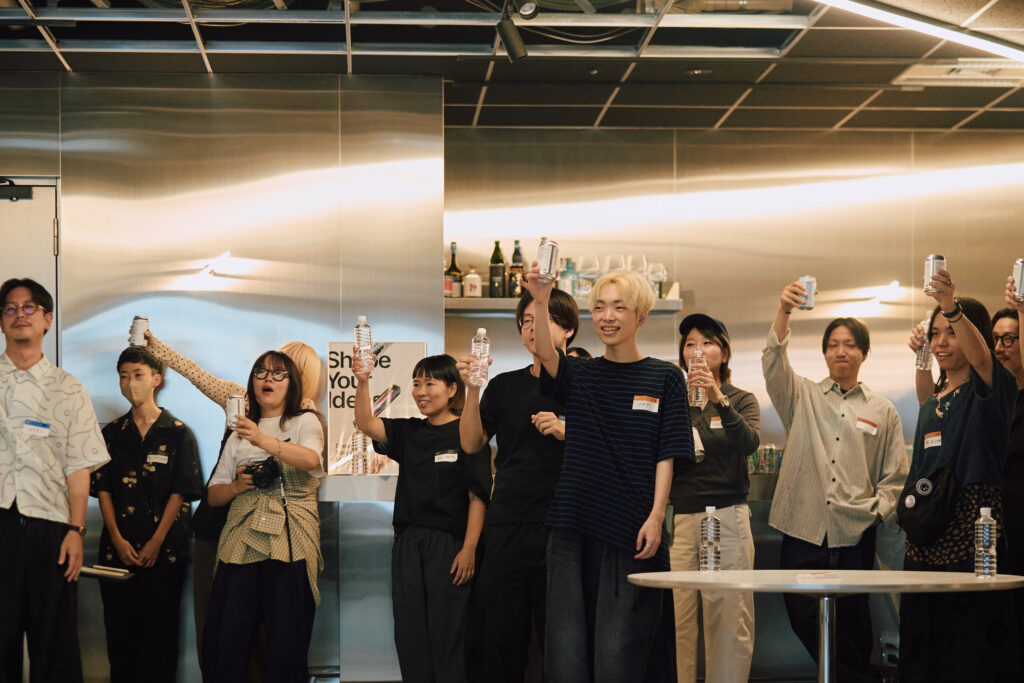
The venue was Studio 's event space. They even had Studio's own beer. It was refreshing, light, and delicious. Nakamura prompted everyone to say thank you, and the event began with a small, light toast that had the same taste as the beer. It was very typical of Nakamura.
The snacks served were mini hamburgers recommended by Chanremi from the studio . I later heard that there was a notice at the beginning limiting each person to two. To be honest, I ate four. Sorry.
Then the atmosphere in the venue relaxes. Conversation begins.
Now, let's hear from the masters.
Episode Talk: Part 1
Katsuaki Utsunomiya"I'd like to polish that area a bit."
The first speaker was Mr. Utsunomiya, who served as the master for the inaugural CREATIVE CLASS session.
"My name is Utsunomiya, and I work as a designer at a company called KEI."
Nakamura added that he recently became independent. When he taught the course, he was affiliated with Shhh inc. A year's worth of time really shows in situations like this. Both the masters and the students have changed significantly in their circumstances. And so have I.
Because it was the inaugural event, applications flooded in, and they had a very hard time choosing the 10 participants. Everyone wrote an unusually long explanation of their reasons for applying. They tried to select people with diverse ages, careers, and places of residence.
"Oh, I just remembered the most embarrassing thing."
When asked to share an anecdote, Utsunomiya began by talking about the first session. Because it was the first session, the online connection was not working properly, and only some people were able to connect. Since introductions hadn't even started yet, if he started talking now, those who joined later would be left out. Utsunomiya chose to wait, and he said:
"It solidified, I think."
It would be nice if we could have a pleasant casual conversation, but it seems that's not something I'm good at.
"Looking back over the past four or five years, that was the most awkward time."
This elicited laughter from the audience. Several former students were also in the room, and they seemed to remember feeling restless, nodding vigorously in agreement.
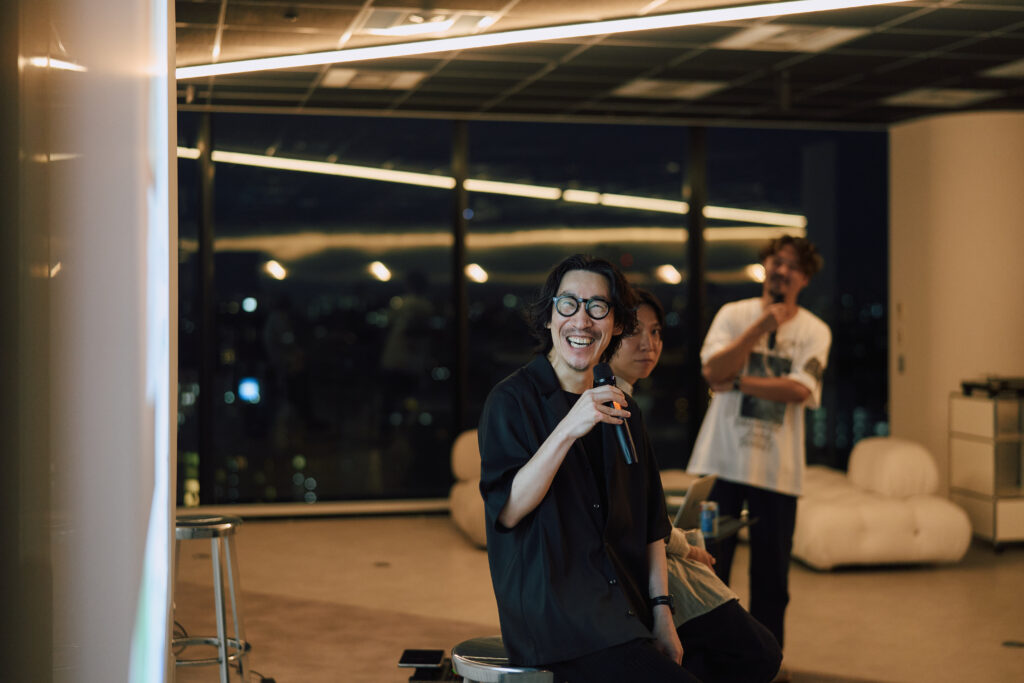
After that, Utsunomiya continued:
"I'm not good at small talk. People like Nakamura-san, and probably Hara-san too, can probably do it. I want to improve that a bit."
I said in the present tense, "I want to polish it."
The conversation, while reflecting on the course, ultimately revolved around what I lacked, and not in the past tense, but as something I want to improve in the future.
(I.e. Student articles from the Utsunomiya course
- Iwasawa-san:A 34-year-old designer struggling to advance in their career takes a Creative Class - Part 1'
- Tomoaki Sugawara:Examining the raison d'être and challenges of brands, using everyday product brands as an example.'
- Satoshi KobayashiThe final assignment of the Creative Class began with re-examining the question.'
- Value lies in your own unique perspective and strengths. Three months of updating both skills and life philosophy. | CREATIVE CLASS
Kazuki Noda"I just want to be alone."
"I really hated it."
This was Noda's first comment. Apparently, he was very reluctant when Nakamura first approached him.
In the branding course, Ms. Noda deliberately designed it so that the students' skill levels would vary. And to ensure that everyone was on the same starting point, she prepared a questionnaire.
"Actually, that's something we do in our mid-career hiring process."
They incorporated the same recruitment methods used in their own company into the introductory part of the course. This is something only a master who runs a company and has hands-on experience could do.
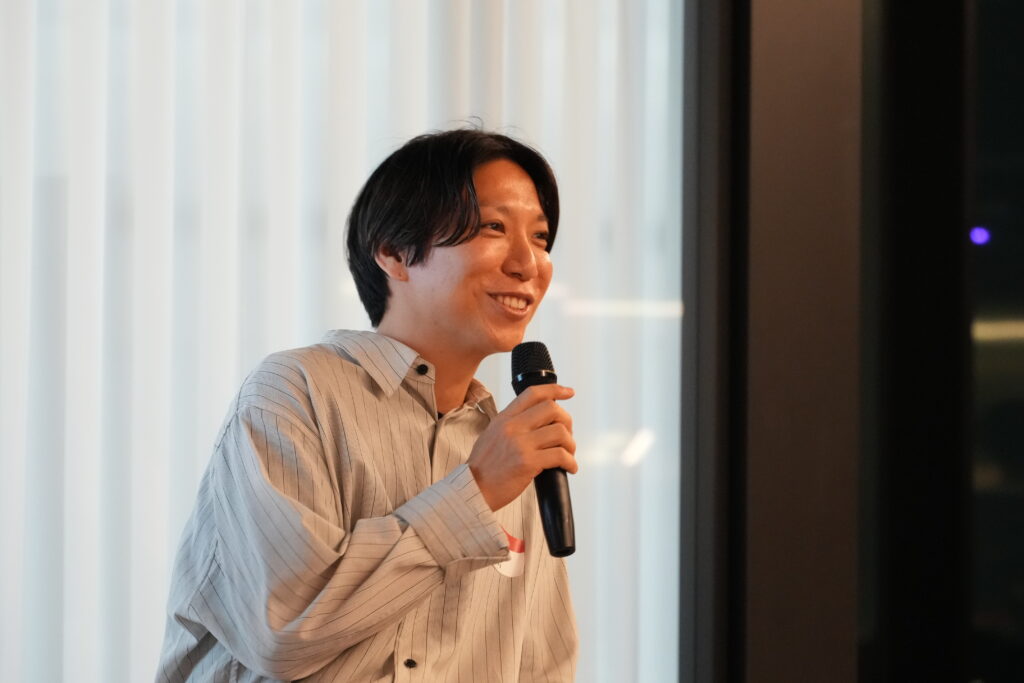
When asked about a memorable episode, Ms. Noda shared her thoughts.
Classes usually ended around 11 p.m. After that, he would walk home, which took three hours. Every single time.
"The lingering effects and exhaustion are overwhelming. I just want to be alone."
What were you doing during those three hours?
"I made time to carefully consider the intentions behind what that person said or why they brought up a particular topic."
It seems they were continuing their lesson on the street.
Nakamura continued, "I was sharing Figma with the students, so I would occasionally check on it."
"Noda is always there. He's always on the move. It was terrifying."
Noda replied, "I'm a 24-hour convenience store," which drew laughter from the audience.
Students can only interact directly with the master during the bi-weekly sessions. Our perception of "being taught" is limited to that framework, at least structurally.
But in reality, an enormous amount of time was accumulated outside of that framework—three hours after classes, or in Figma at night when no one was watching.
That must mean they were approaching it with that much passion.
And there was one more thing that bothered me as I listened. The question directed at the master was, "How was the course?"
Yet, neither Utsunomiya nor Noda talked about results or what they felt they had achieved; instead, they talked about what they lacked and the time they had invested.
(I.e. Report on the Noda Course
Hirofumi Nakagawa"On the contrary, I learned a lot myself."
[ ANDMADE Inc., Nauts | Thinking techniques for finding and cultivating the "seeds of fun" ]
This course covers the process of finding ideas and what to do with them afterward.
When asked how it went, Nakagawa replied:
"I designed this project to see what would happen if I took what I usually do intuitively, structured it logically, made it easy to understand, and turned it into a lesson. In the end, I learned a lot myself."
I was able to re-evaluate my own thoughts.
While Nakagawa has worked as a member of Nauts and sometimes collaborates with others on teams and projects, he has primarily been a leading figure in the industry as an individual since becoming independent. He probably hasn't had many opportunities to pass on his skills to someone else.
It's about putting into words and rearranging things that you've been doing instinctively, and then bringing them to a level where they're understandable to people who have paid to learn from you. Those who are at the forefront of their field simply don't have the time, nor the reason, to do so for others.
The nine masters took on that responsibility.
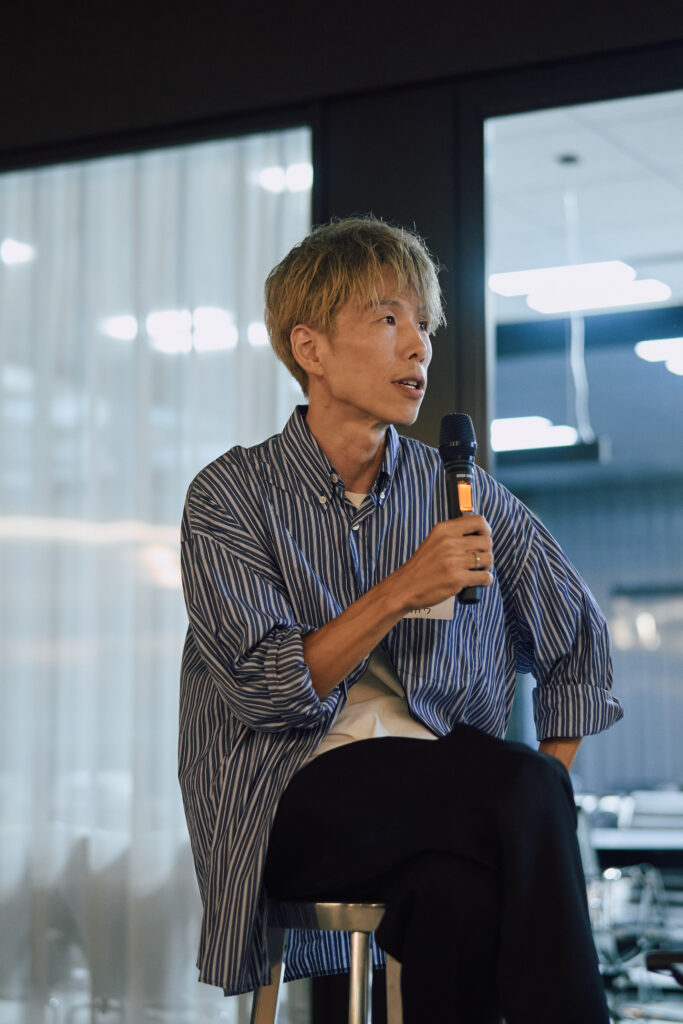
"That was great. It was great, but there won't be a second time."
Mr. Nakagawa said this and laughed. This phrase, "There won't be a second time," would come up from the mouths of various bartenders that day. Of course, half of it was a joke to get a laugh. The other half was probably serious, indicating how much effort they had put into it.
When asked about a memorable event, Nakagawa replied:
"Watching that moment when they suddenly awaken is really exciting, isn't it?"
As they continued to exchange assignments, some people suddenly showed remarkable improvement after a certain point. He spoke with delight about having witnessed that moment. When Nakamura chimed in, "Because of my position, I watch all the videos, but like in reality dating shows, I rewatch the previous episode before watching the current one, which makes it even more moving," Nakagawa continued.
"It's just a little bit of advice. When I see how they've taken it to heart, interpreted it in their own way, and actually improved the quality of their output, I think it's really amazing."
The book focuses on stories of personal learning and the excitement of witnessing students' awakenings. There is almost no discussion of the tangible results of teaching or the methods used.
(I.e. Student articles from the Nakagawa course
Hidetoshi Hara"I've been racking my brain trying to figure out what I should give him."
[ Sunny Inc., Nauts | Sharpen your expressive and creative skills with "Key Visual Comedy Contest" ]
Because Mr. Nakano was late, the order was hastily changed, and Mr. Hara took the stage. Mr. Hara remains unfazed even in situations like this.
"My name is Hara, and I run a company called Sunny. Hello everyone. Thank you for taking the course. I was really happy to see so many applicants."
When asked about his reaction to accepting the job, Hara said something unexpected.
"Mr. Nakamura, I never thought I'd do this. I never thought I could be an instructor like this."
He said he thought it was impossible because he knew how difficult teaching is.
The theme of the course is "Key Visual Improv Comedy."
While rationale and logic are important in design, he thought it would be nice to have at least one course where people could just "give it a try" without any of that, and that's how he came up with the idea. He was surprised by the number of applications he received.
"I think it looked easy to them. It went exactly according to plan."
He had a smiling face, but his eyes were serious. In reality, the assignments were far from easy, and apparently many people were crying behind the scenes. Mr. Hara himself insists, "I'm not strict." It seems the structure was such that the students pushed each other to improve, and strictness naturally arose. I wonder if that's really true.
At this point, Hara mentioned the issue of capacity limits.
"With 20 people, it's definitely too many, and I think I can think, 'This is about right for me,' but with 10 people, there's no escaping it."
Hara continues.
"I think five people would be too cramped and people might actually drop out. So about ten people would be ideal. It's just the right number."
There's no escaping the number of people. The master is watching, and the other nine students are watching. You have no choice but to face it. I think this is the core of the design of CREATIVE CLASS.
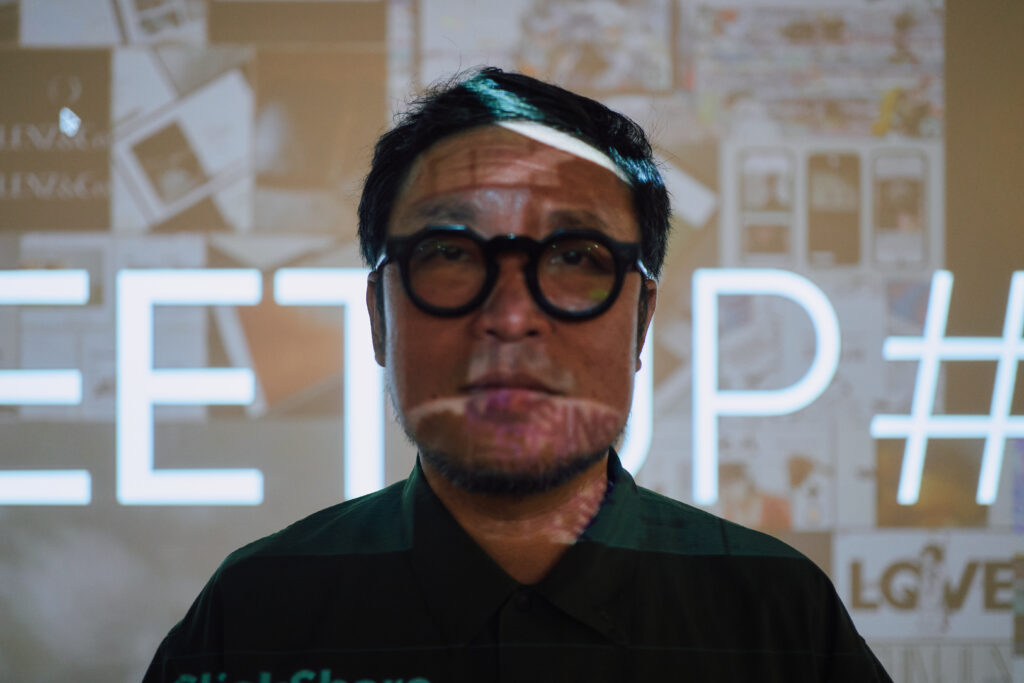
And then this statement was made.
"I've been racking my brain trying to figure out what I should give him."
This isn't a real case. Neither side is necessarily right or wrong. Therefore, I don't know what to provide.
"I continued to worry about it for a long time."
It seems that wasn't the end of it.
"I was worried about it, but at first I always wanted them to take home something tangible. But then I thought, maybe that's okay. I feel like they took home a sense of the atmosphere instead."
It's not about technique or finding the right answer, but about the overall feel or atmosphere.
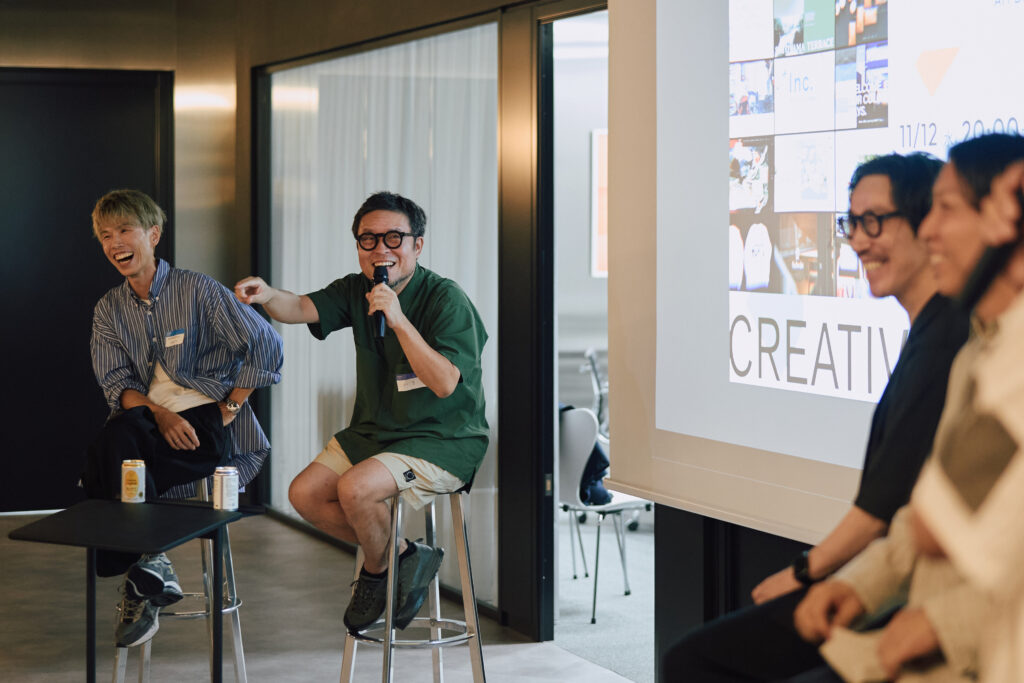
Watching Hara-san, I felt like I understood what that atmosphere was all about. Despite the sudden appearance on stage, he didn't panic and started making people laugh with his self-introduction. He teased the students, teased himself, and the tempo and intonation of his conversation relaxed the atmosphere. The air opened up. When asked about his routine for concentrating, he immediately replied, "There's a waterfall in my garden. I stand under it." The venue seemed to freeze for a moment, but even that was typical of Hara-san.
Their playful attitude is what creates the atmosphere.
Reading the notes written by student Marugao , I found many of Hara's words.
"Don't over-process it; have the courage to discard it when necessary."
"We need the conviction that it won't look like it could be done the same way no matter who does it."
After struggling to decide what to give, the instructor said it was about creating a good atmosphere, but the students definitely received a lot of helpful words.
(I.e. Student articles from the original course
Interaction Time: Learning that was previously one-way becomes two-way.
After the first half of the talk ended, Nakamura started moving the audience around.
"Please go to the table corresponding to the color of your name tag."
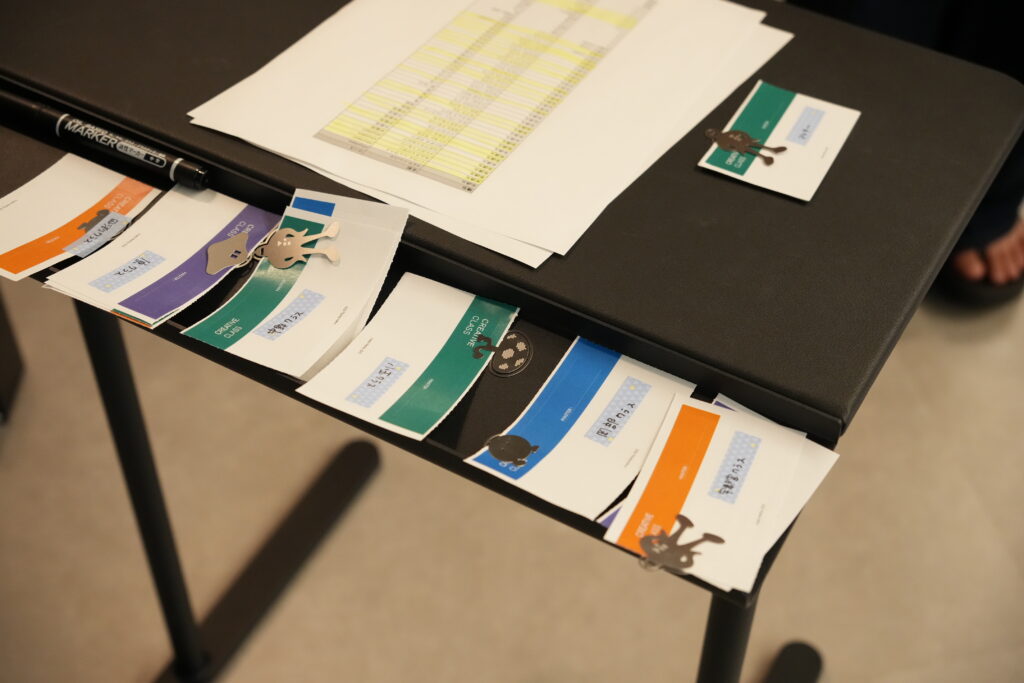
Each participant's name tag had one of five colors, and each table had a box with a sticker of the same color. The setup was designed so that going to a table of your color would inevitably mean mixing with people from different courses.
The group, who had been engrossed in the bartender's conversation, picked up their mini hamburgers and dispersed to tables of different colors.
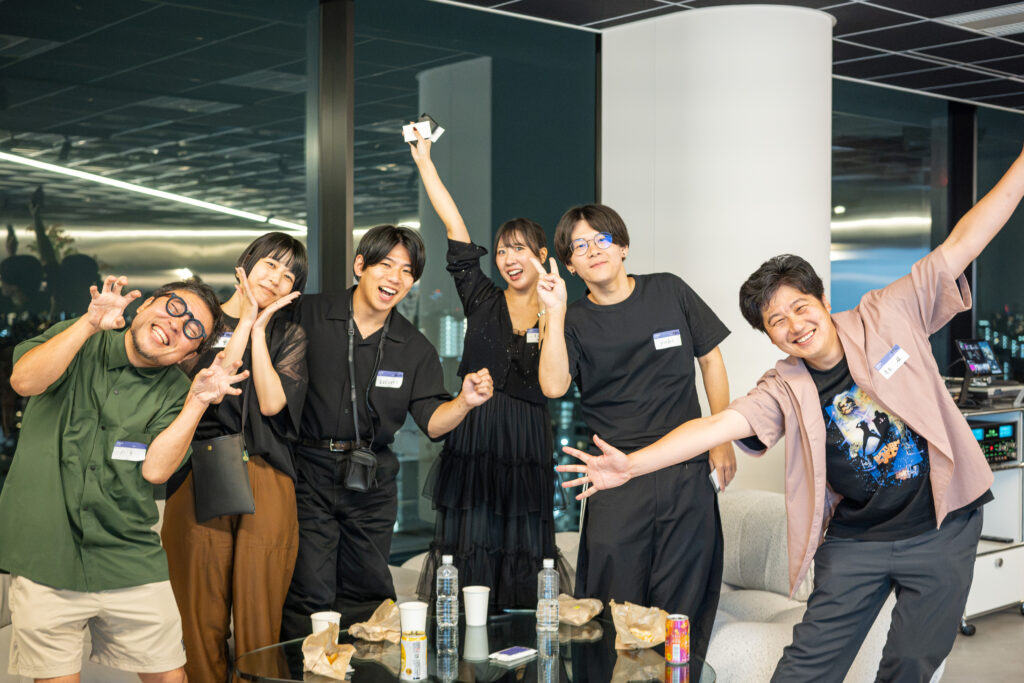
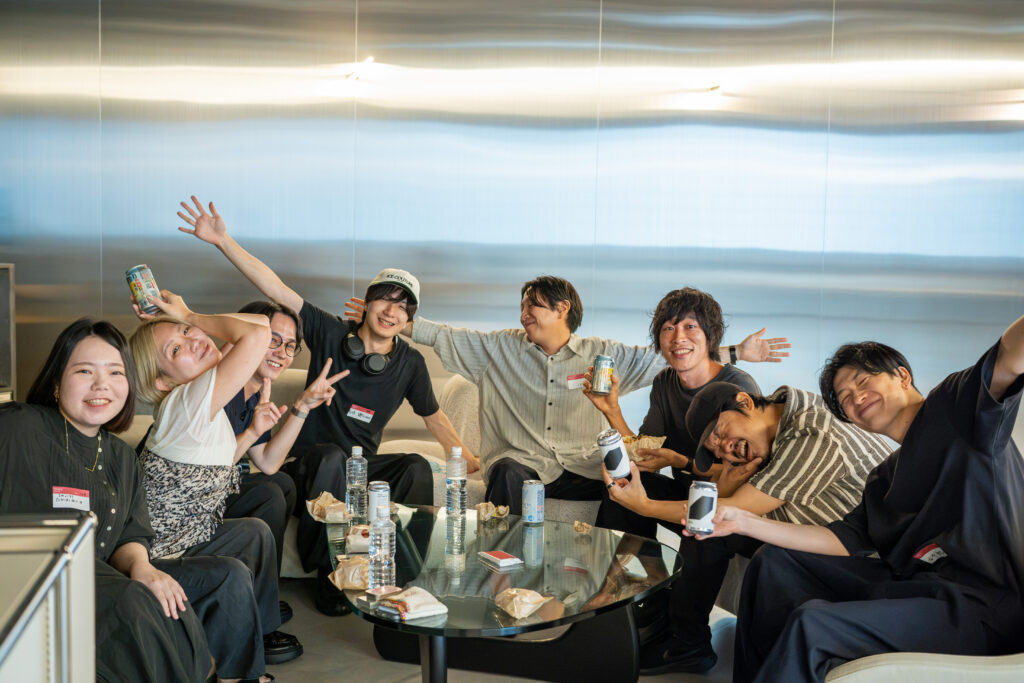
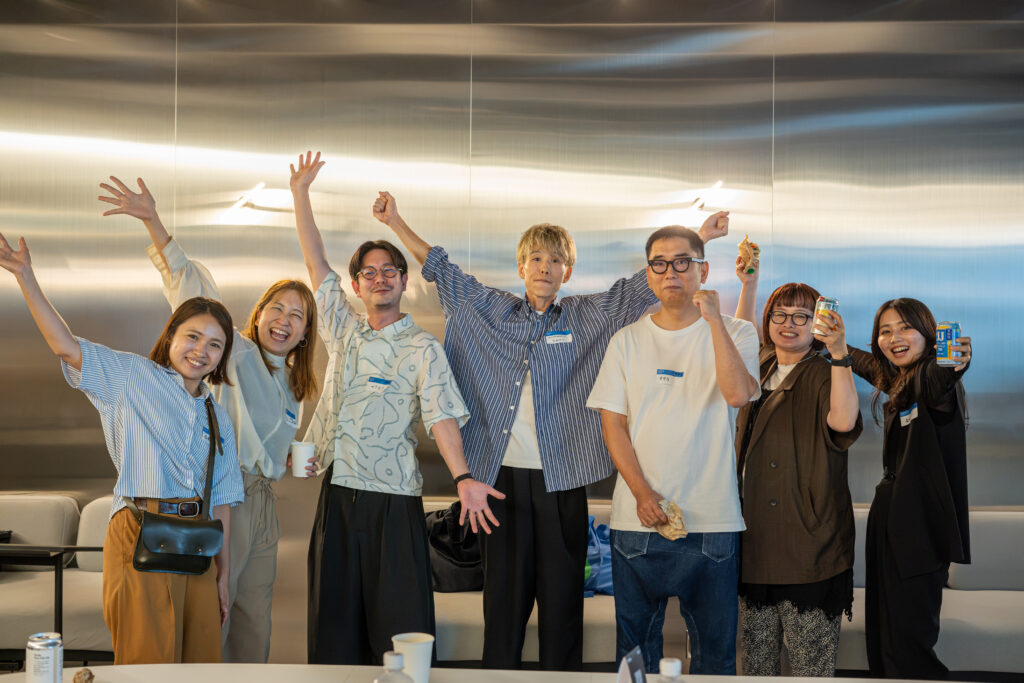
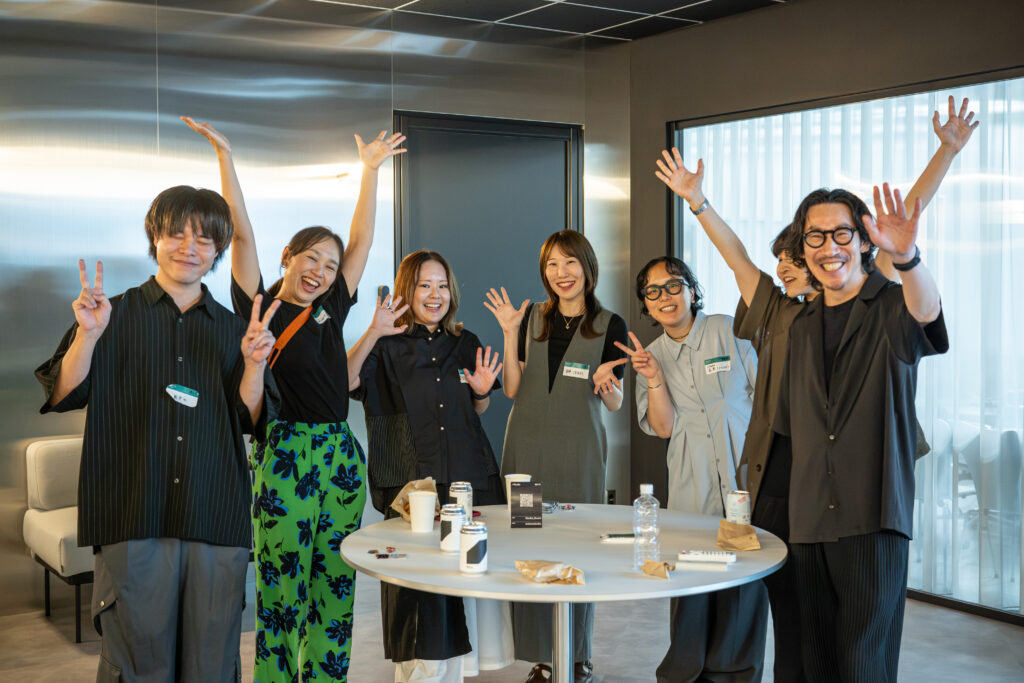
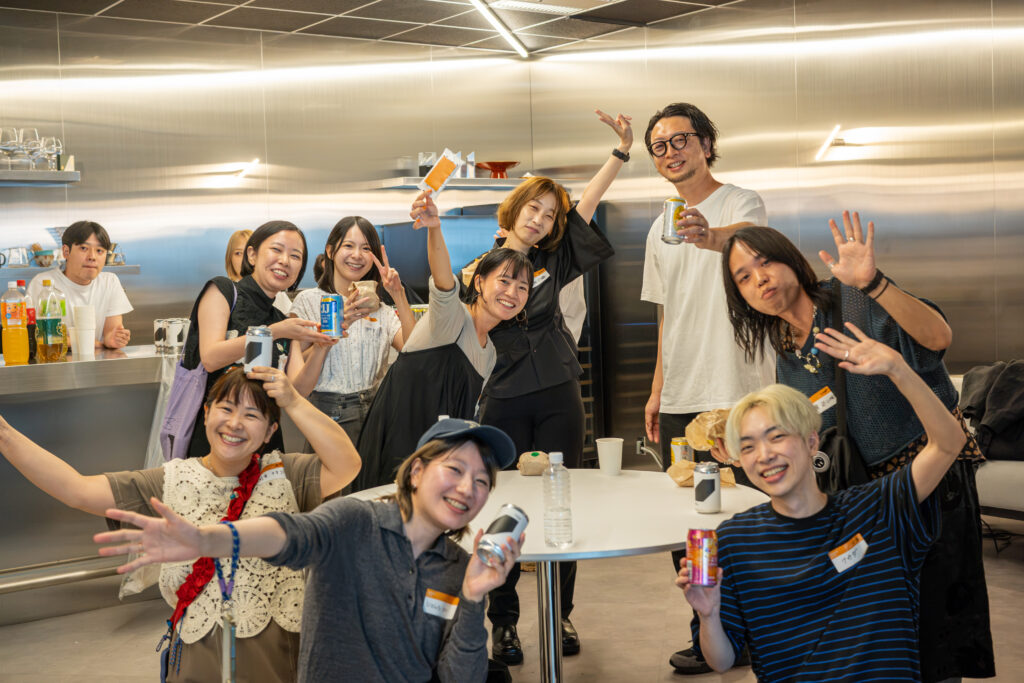
Networking events tend to be places where people exchange business cards and share their affiliations and job descriptions. This place was different. Although everyone was on a different course, they had all spent three full months reflecting on themselves and receiving feedback from their masters. Even before speaking, they understood what each other had experienced and what they had gone through.
The people here have a different look about them.
Direction, design, engineering, photography. Their backgrounds and career paths are completely different. Despite their diverse specialties, ages, and places of residence, the conversation never faltered. With the masters at each table at the center, words and passion were exchanged, and even when it was time for the second half of the talk to begin, the conversation continued.
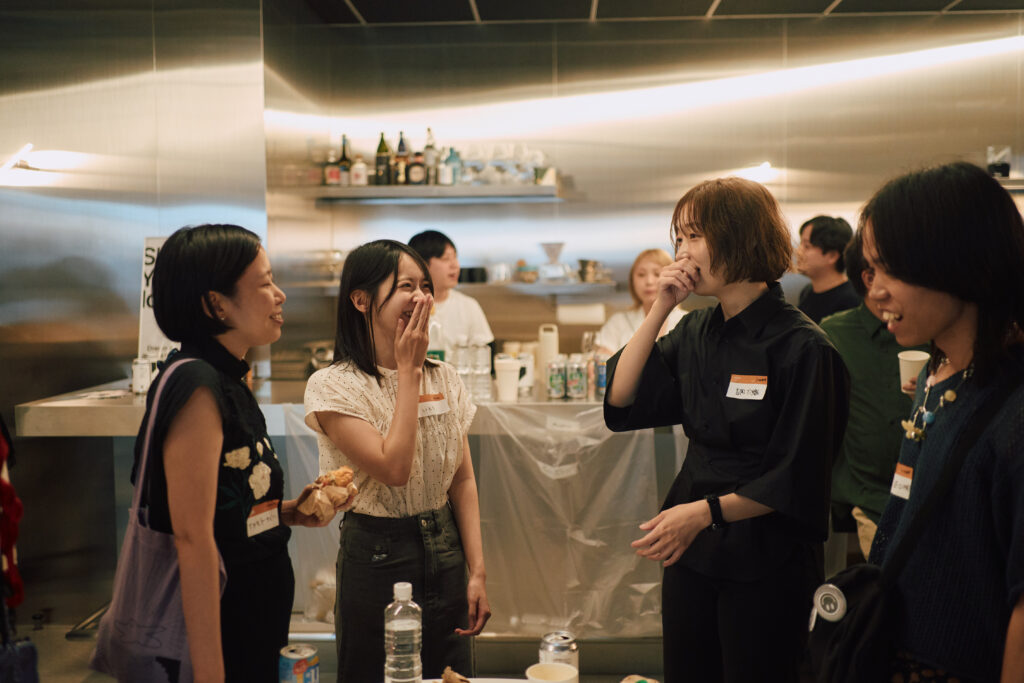
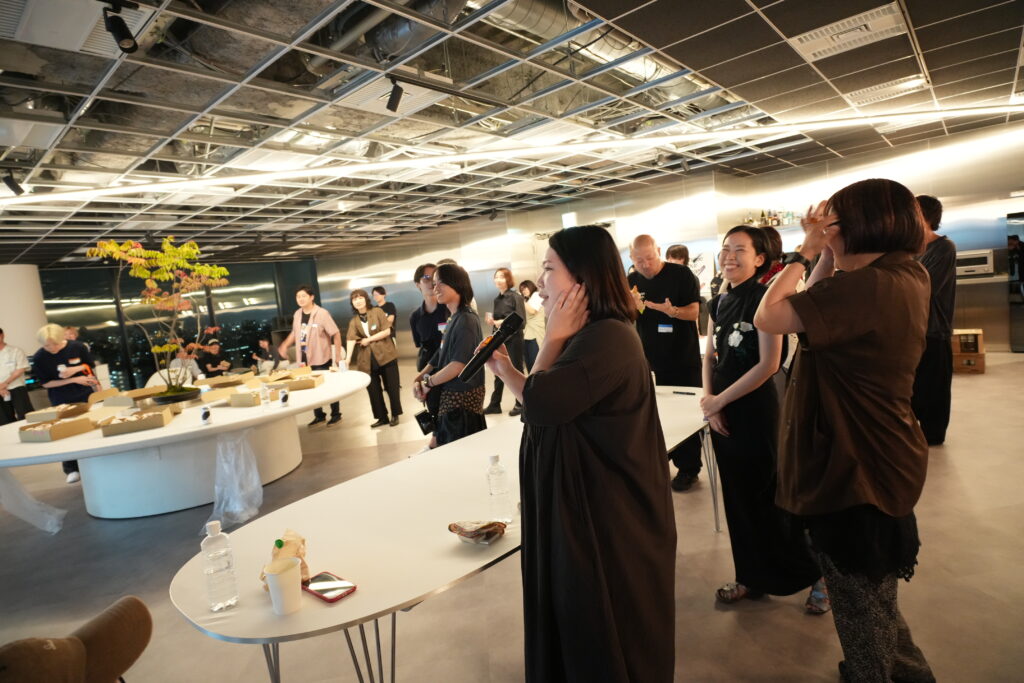
In writing this article, I wanted to convey the atmosphere of the event in a more comprehensive way, so I asked several students for their impressions. One student told me this:
While I already knew quite a few of the designers, it was a very valuable opportunity to talk with engineers and photographers, as I hadn't had that chance before. I felt that these encounters were only possible because of CREATIVE CLASS, which offers courses that span across different fields.
Branding, design, engineering, photo direction. The nine courses, spanning diverse fields, were not designed to bring together people from the same cluster. I think the courses were structured with the assumption that people from different backgrounds would mix, rather than being mixed by the color of their name tags.
The other person's story was also very impressive.
Every time, everyone's assignments were so amazing that I felt a strong sense of inferiority towards my fellow students. The moment I walked into the venue, I felt ashamed, wondering how I could possibly show up there.
And then he continues:
But after talking to everyone, I realized that we all felt the same way, and that made me feel a little better. In CREATIVE CLASS, you only receive feedback from the masters in a one-way manner, so this was the first time I was able to hear the thoughts of my classmates who were taking the class with me, and I feel like that "curse of inferiority complex" has been broken.
The observation that it was a one-way street really struck me.
In the bi-weekly sessions, we are given assignments and receive feedback from the master. We can see the output of other students, but we don't know what they were thinking or where they got stuck. All we can see is the result after each person has struggled and persevered. Because of this, it's easy to feel like you're the only one who isn't doing well.
On this day, it became two-way communication for the first time: between the master and the students, and between the students themselves.
Listening to the master's story, I realized that "the master had also struggled," and talking to the fellow participant next to me, I realized that "we were all in the same boat." Although it was called an exchange time, I think what actually happened was a more concrete and important exchange of insights.
I remember having a memorable conversation with Mr. Utsunomiya during the networking session.
Mr. Utsunomiya and I started our own businesses around the same time, so we're contemporaries. It's presumptuous of me to even compare myself to him, but he had such a brilliant start that I always thought he was far ahead of me.
He said, "I want to cherish the individuality of things." I myself have, to some extent, been driven solely by that individuality. I felt as if the distant figure in his back had suddenly come a little closer.
Episode Talk: Part 2
Hiroaki Nakano"The inspiration was a gradient."
[ L/O | The Essence of Inspiration and Design: Turning Small Triggers into Big Differences ]
The first up in the second half was Mr. Nakano. He was the same person who hadn't made it in time for the start of the first half, and his turn had been swapped.
He usually lives in Niigata and is always busy. When I looked for Nakano-san at the venue, I noticed a person who was exceptionally tall. Yes, there he is.
The theme of the course was "inspiration." I imagine the organizers were a little apprehensive about whether participants would actually come up with any inspirations during the three-month course. When Nakamura asked this question, Nakano's answer was unexpected.
"It was quite a gradient, wasn't it?"
He originally thought it was something that happened discontinuously. He imagined it as something that you delve deep into within yourself, struggling and suffering, and then suddenly surfacing.
However, the reality was different.
"When I receive output from the students, it inspires me, and I give feedback that makes me think, 'Maybe I have this perspective too.' It's like a cycle of inspiration."
You receive inspiration and then give it back. You are then inspired again by what you receive back. Within this loop, the seeds of inspiration are born and gradually refined.
This is probably a result of the very structure of the CREATIVE CLASS environment. A continuous feedback loop takes place every other week over a three-month period. You can't just dive in alone. It's designed so that your thoughts constantly move back and forth between yourself and the master, while your hands keep moving forward.
If inspiration is something that emerges from deep personal reflection, then this design would actually be a hindrance. But what actually happened was the opposite.
Ms. Nakano's course dealt with a real-world case: "Dress," a confectionery brand from Niigata. The brand was founded by someone who had worked as a pastry chef at the Imperial Hotel for many years. The client was present at the final presentation.
And ultimately, they are working with the students who were selected.
"I'm still working on it a little bit right now."
Ms. Nakano doesn't consider her work complete within the course itself. Just as her inspirations arose from her interactions with the students, her work continues as an extension of those interactions even after the course ends.
The relationship between master and student is gradually transforming into something else. Inspiration and relationships are shifting like a gradient.
DRESS MITA MASAKI LAB. | Official Online Shop for Dresses
(I.e. Student articles from the Nakano course
- Aoki-san (Re:design News)I took the creative class "The Nature and Design of Inspiration"'
Kenji Okabe"I don't think designers are gods."
[ mount inc. | Become an engineer who can plan the expression of websites ]
"My name is Okabe from mount. I think today's only designers here, right?"
That was the first thing they said. In fact, there were very few engineers in attendance.
"I don't think designers are gods."
When asked about his motivation for planning the course, this was the first thing Mr. Okabe said.
Engineers tend to complain to designers, he continues.
"But designers aren't gods, and I think they can't design while considering every single detail."
Therefore, it would be great if even one more engineer could get involved from the planning and design phases.
In the workflow, engineers come after designers. But is that order being treated as a hierarchical one? A structure where there is a god and people receive instructions from him. Okabe rejects this way of thinking, and asserts that there is no god in a project where everyone shares a common goal.
The assignment that Mr. Okabe had prepared was a little unusual.
The idea is to create a portfolio website. However, it won't be for myself. I'll create a persona I admire and then create a portfolio website for that person.
What do they do on weekdays? What time do they start work in the morning? What are their hobbies? They write down every detail, even giving them names. In reality, they create "someone" like a female subculture artist or a plasterer who speaks with his back rather than his words.
Imagine an idealized version of yourself. Doing so allows you to perceive charm from a new perspective. The challenge is not to create something based on instructions, but to create it yourself and translate it into the most optimal expression.
Okabe says:
"It's not mandatory, but I was wondering if anyone would make it public, and so far, there are zero people who have done so lol."
He himself admitted that he had focused too much on the planning stage, and that the implementation in the latter half was rushed.
The course was attended by engineers whose main focus is implementation, and it delved into areas they don't usually deal with, such as planning and ideation. Perhaps there was a unique learning experience precisely because they weren't familiar with those areas.
I'm a huge portfolio enthusiast, so I'd honestly love to see one. I have a faint hope that if anyone is interested, they might make one public someday.
Shuntaro Two students speak in the absence of the master.
[ bird and insect ltd. | How to create "photographs" that tell stories beyond words ]
The owner, Shuntaro, was unfortunately unable to attend that day.
Instead, it was Principal Nakamura, who was acting as the moderator, who explained what the course was like. This was because Mr. Nakamura himself had been a student of the course.
"When I was planning the project, I wanted to participate too, so I applied. I was properly selected through the official channels, and I paid the full amount of money."
The course focused on treating photography as a visual language. It involved verbalizing the lens usage, framing, and layout—all aspects of creating a photograph that conveys a message in a second—and then communicating that to others. The idea was that if you could do photo direction, you could take great photos yourself.
However, when we actually started the class, it turned out to be a much more demanding experience for individual creativity than we had imagined. That's because the ultimate goal was to create a photobook.
Kodama-san enters from the side.
"I had to be very precise in my verbalization, but the feedback was very abstract."
Nakamura answered immediately.
"That was brutal, wasn't it?"
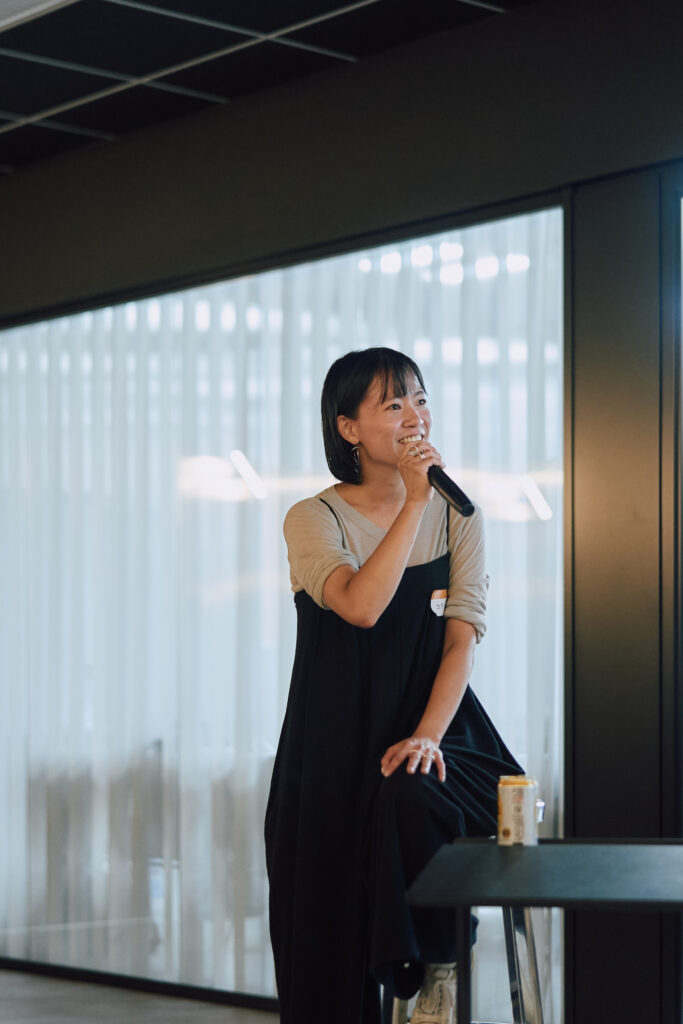
I, Tom, also participated in this course as a student, so I understand that feeling very well. The feedback is certainly quite abstract. "Something's off," "This looks like it could be interesting." The reasons aren't explained on the spot.
However, only the surface of the words was abstract.
"This is the way of thinking of that era," "This photographer might be a good reference," "Your work is close to this style." The references were presented with incredible detail. I discovered many wonderful photographers and photobooks through that process.
Instead of giving the answer in concrete terms, the process is guided by referring to relevant sources. Clearly, incorrect directions are eliminated. This in itself might have been a form of direction.
And in this part, Nakamura himself revealed something.
"I failed to submit the assignment twice. Ms. Kodama gave me a good scolding."
Kodama intervenes.
"As both principal and teaching assistant, not assigning homework lowers morale, so you really should stop doing that!"
The pursuit is relentless.
Listening to their exchange, which was accompanied by laughter, I actually found it a bit painful to hear. In my case, although I was only a student, there were several sessions where I couldn't complete the material, and sessions where my thinking was clearly insufficient. Ms. Kodama's words really hit home for me.
Nakamura has made two photo books to make up for it. It seems he's saying, "I did twice as much, so please forgive me."
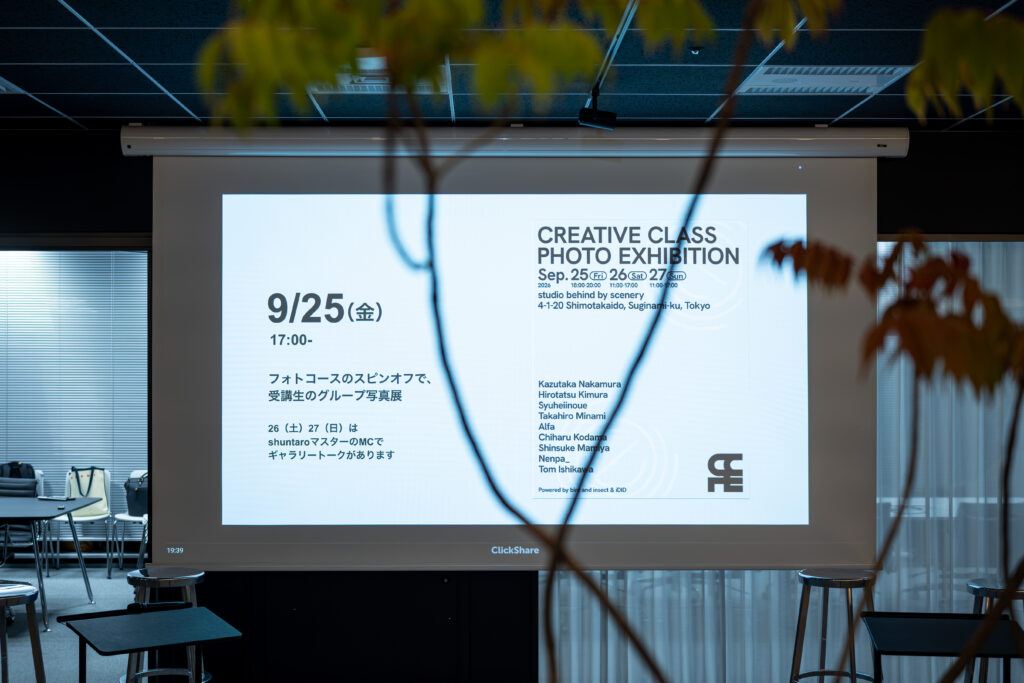
This course then led to an exhibition, and a photo exhibition will be held for three days from September 25th (Friday) to 27th (Sunday). Of course, I will also be exhibiting my work, but as of the time of writing, it is not yet finished, and Ms. Kodama's face keeps popping into my mind.
Shuntaro Course Photo Exhibition (September 25th - 27th, 2026)
(I.e. Shuntaro course student articles
- Shuhei Inoue (X) Second post, Second post
- Tom Ishikawa (X)First Report
Chiyo Kodama"Would it be more helpful to teach them the way of thinking itself?'
[ ium inc., THE GUILD | Design as Chemistry ─ Elemental thinking that creates freedom ]
Ms. Kodama was the only master who spoke on the day who had also participated in CREATIVE CLASS as a student. While taking Shuntaro's course, she also taught her own course.
When designing the course, the first thing they considered was "what not to do."
"There were so many prominent figures giving lectures for designers, so I thought it would be better if I did something different," that's how it all started.
Utsunomiya-san, Noda-san, Nakagawa-san, Hara-san, Nakano-san. These are all people who are active on the front lines as designers, and there are already plenty of people who can teach design. That's why I'm going into something other than design.
"I thought that teaching what I've been doing all along, or rather, my way of thinking, would be more helpful to everyone."
That's when I introduced the concept of "elementalization thinking."
Untangling complex, intertwined things, breaking them down to their smallest units, and discovering the inherent structure of the subject—this is the thinking approach that Ms. Kodama actually uses in her daily direction and design work.
"Elemental thinking starts with gathering 100 things you like and classifying them, understanding your own inclinations, and then using that to control your own thinking."
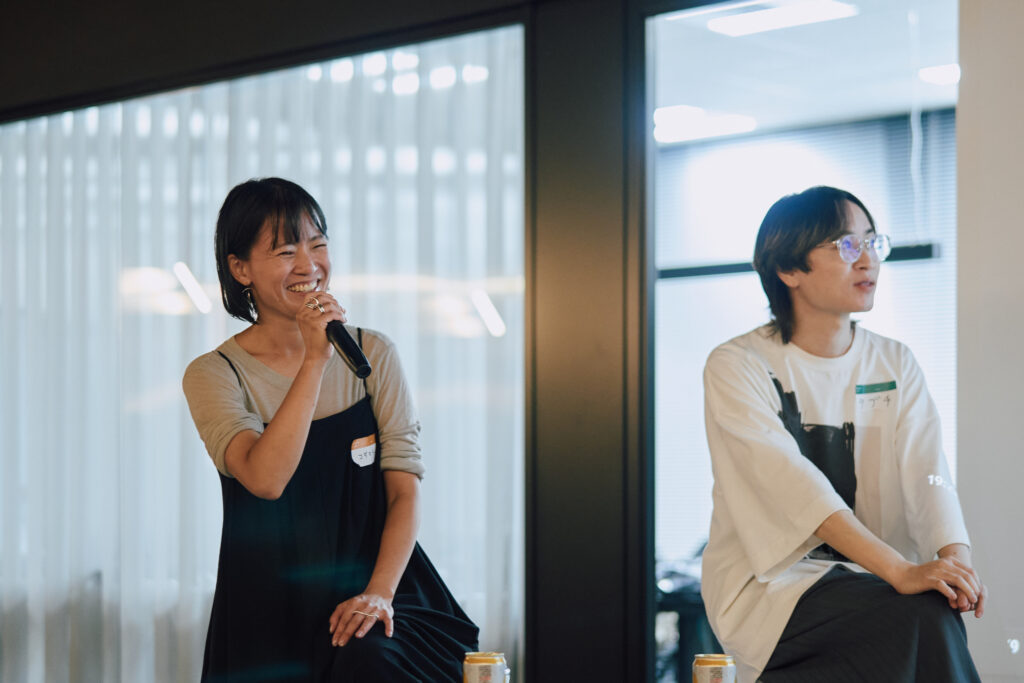
This course had another special circumstance: it was the first course in the CREATIVE CLASS series to be sold as an archive.
Many students had consistently requested video streaming and archive sales of the courses. Nakamura wanted to make this a reality, but to do so, the course needed to be structured in a way that allowed people to learn even without being present in person.
"I made an unreasonable request: 'Could you create something like the ium method?'"
"That was an incredibly unreasonable request."
Kodama-san replied immediately.
In reality, this must have been a tremendous amount of pressure. In live classes, there are aspects that can be compensated for by the atmosphere of the moment. There are also things that can be compensated for by the relationships that are cultivated day by day. However, there is absolutely no such leeway in archives. They must be created with the premise that they will remain and be watched repeatedly.
But I think only Ms. Kodama could do that.
Even though we were in the same course, Shuntaro's submitted materials had a strong logic and clear language. The visual output was truly impressive, and I learned so much from him in the same class. I've heard that his photobook is also coming along to be incredibly powerful. As a student, he never seems to cut corners.
As a master, I accepted challenging tasks, and as a student, I tackled assignments. I was doing both of those things within the same three-month period.
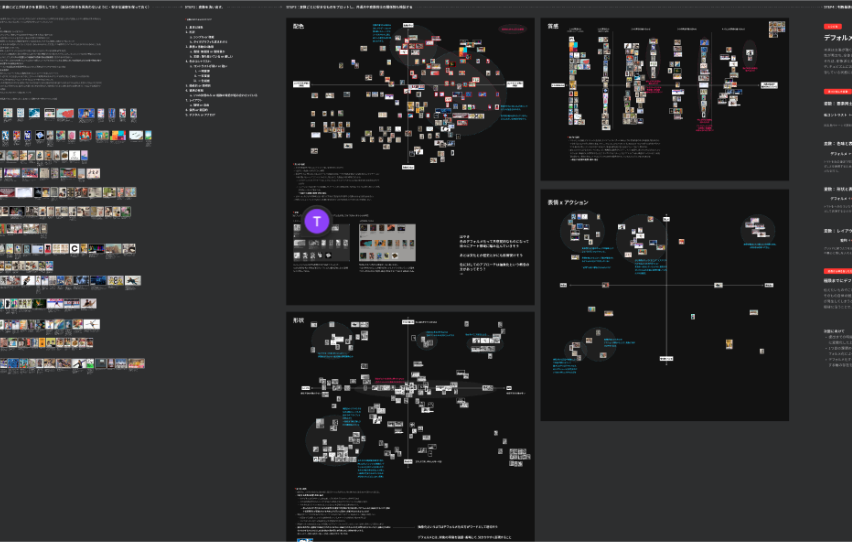
(I.e.XiaoyuStudent articles from the course
- Takashi Mukouda: (X)Post
<An online event offering a free "Elementalization Thinking" experience from the Kodama Course has been announced!>
This special episode comes with a discount on the archived paid streaming, so there's no reason not to participate!
*Information regarding the paid archive streaming will be announced later on the CREATIVE CLASS official website and X.
Shogo Tabuchi"I hope I can be there to support them as they run alongside me."
Tabuchi's course finished four days ago.
"It finished this Monday, so it's today."
He took the stage while steam was still rising from the food.
"No, but I think the students had a much harder time than I did."
Mr. Tabuchi has a unique career path among the masters. After working at a production company, he now works for a business company while also running his own personal business. The idea of how to utilize that experience was the starting point for the course.
"In the case of a freelance website designer, the process is that the client has a problem, and then you receive an order from them. But in the case of a business company, there isn't even a problem to speak of."
I wanted to create something based on my own observations. That's why I made the assignment something that involved creating something from nothing.
Take a step back and question the apps you use every day. Social media, finance, video media—we use them without thinking, but there's always something we wish was different. Identify those issues, develop your own ideas, and bring them to life.
Tabuchi used toilet paper as an example. We've been using the same type for ages and haven't given it much thought. But in reality, we might be thinking, "I don't like the rattling sound."
The challenge is to translate those feelings of unease into planning and design.
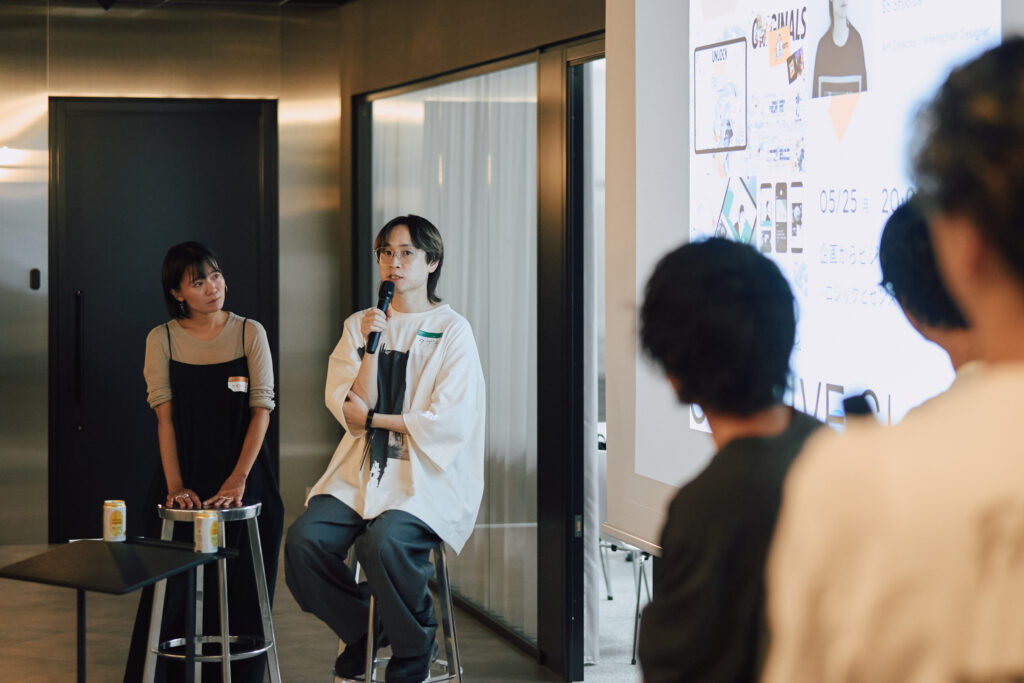
What surprised me was that Mr. Tabuchi himself had taken on the same challenge. He had created a test case for a parent-child app that could help them learn kanji.
"I thought that if I only taught abstract concepts, people wouldn't be able to imagine what they would actually create."
I will create things together with the students, while demonstrating my own thoughts and output.
This person, who works for a business company, also takes on freelance projects and runs a gallery website, is creating the materials for the course themselves. I think it's because they're constantly working with their hands that they can remain a teacher who stays on the front lines. The S5-Style media, which has been running for 20 years, is probably a symbol of that.
Then, Tabuchi talked about what happened after the course was over.
After completing this assignment, the students created original product proposals that were not imitations. I want to create opportunities for them to take these proposals somewhere, submit them to international awards, or give presentations.
"It's not about forcing anyone; I'd like to gather everyone's opinions and work together with them as we go along."
Nakamura interjects, "You're going to run alongside them? That's going to be pretty intense." Giving some advice is fine, but running alongside them after the race is definitely a bit intense.
There are no contractual obligations. Yet, the fact that the word "support" comes up shows just how serious I was about these past three months. I still had enough passion left to say that.
(I.e. Student articles from the Tabuchi course
- Moeko-san:Notes on learning from iDID's 'CreativeClass''
- Moeko-sanI want to broaden the scope of my design work. A few months of learning "design skills that can be implemented from the initial stages" [CREATIVE CLASS]'
- Yuri-san:I'm glad I was able to connect that feeling of "maybe I'm weird" to design.'
- Kumapui-sanThe story of a second-year designer who was crushed in Creative Class but became stronger.'
Crosstalk: What's the difference between teaching subordinates and teaching students?
As the second half of the talk was drawing to a close, Ms. Kodama posed a question to the masters, and a cross-talk session began.
"Were there any differences between teaching subordinates and teaching in CREATIVE CLASS?"
This was a good question. All four people gave completely different answers.
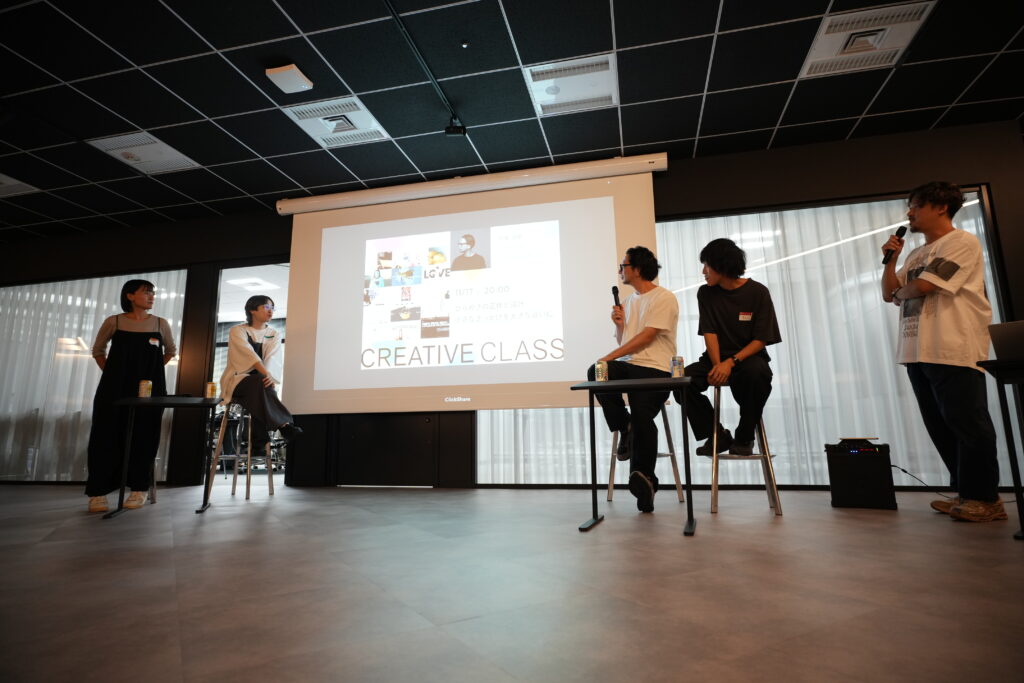
Okabe answers about the sense of distance.
"If it were someone on my team at the company, I might have said harsher things because I felt I absolutely had to do something about this person's life since I was the one who hired them."
In the relationship between a master and student in CREATIVE CLASS, it's hard to know how far you can go. It's not that I'm holding back, but I've always wondered how far I should go.
Mr. Nakano doesn't have any subordinates to begin with. He says that his relationship with external partners is different, as they share responsibility on an equal footing.
"Because I don't have any subordinates, I think I probably put too much care and attention into these 10 people. That's why it took so long, and there was a lot of communication outside of working hours."
I am aware that I went too far. And then I continued:
"I learned a lot about the richness of using my time for things other than myself."
Mr. Tabuchi had a different perspective.
"When someone acts spoiled around me because we're colleagues at work, I feel like saying, 'No, this isn't school.'"
But CREATIVE CLASS is, in a sense, a school. So, I took the task of teaching seriously.
"I had decided on the seven-session curriculum from the beginning, and I was like a project manager, creating progress charts to track each person's progress."
He thought he was managing his subordinates more carefully than they did. Certainly, it's logical that the way you teach changes depending on who's paying, the context, and the relationship between the people involved.
Ms. Kodama was facing the opposite problem.
I wanted to teach elemental thinking to my own staff. But then I thought, wouldn't it be a bit creepy to ask them to join the company and then teach them my way of thinking? That's when my self-control kicked in.
"Conversely, I realized that I could more directly teach my way of thinking to the students taking my courses."
The division of roles became clear through this course: staff receive feedback on design, while students receive feedback on their way of thinking.
What I found interesting while listening to this exchange was that their answers didn't clash, but rather blended together and permeated each other. Tabuchi looked at Nakano and said:
"I think Mr. Nakano's pattern of showing affection is the opposite of mine. I realized I might have been a bit more conservative."
Nakano replies.
"No, but Tabuchi's style is more sustainable, isn't it?"
Okabe also reacts.
"I was really struck by what Tabuchi-san said earlier, 'This isn't school,' and it made me think that maybe I should have said more."
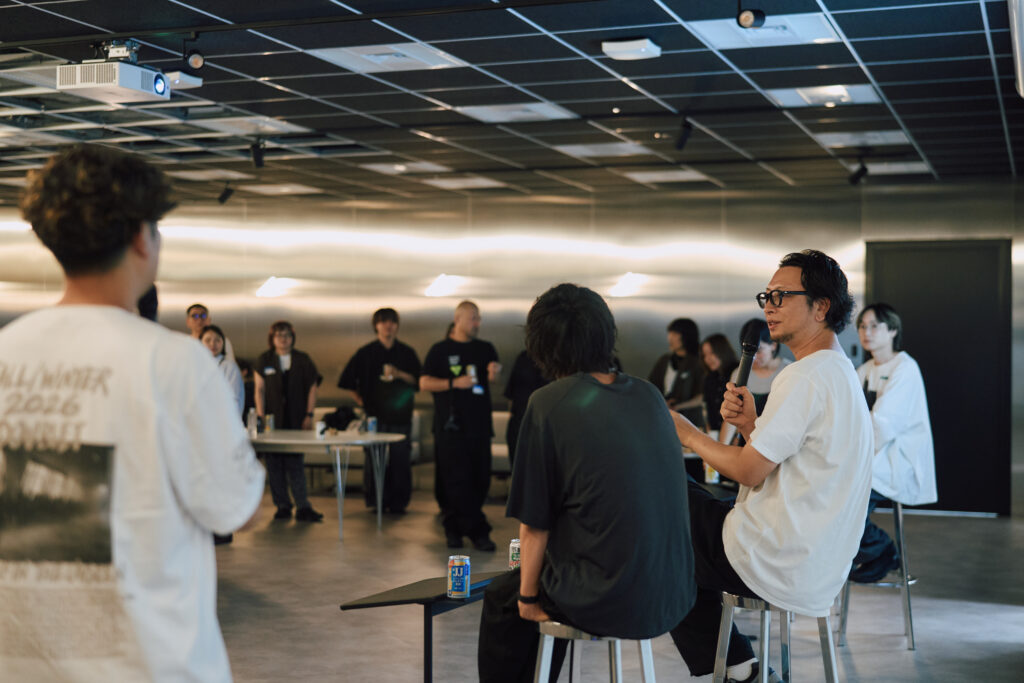
At this point, I finally figured out what had been bothering me all day.
The masters aren't just fighting with their current abilities alone. They're asked questions, listen to others' answers, gain insights on the spot, and sublimate them into their own learning. They're constantly updating their methods in this moment. The reaction and cycle are astonishingly fast.
The person teaching is often the one learning the most.
Closing remarks: Why "Master" instead of "Teacher"?
"Time is almost up, isn't it?"
Mr. Nakamura will wrap things up. We'll be completely vacating the premises by 21 PM, and there will be cleanup to do as well.
"For the first year, when we started, we had no reputation or anything, and people were probably thinking, 'Wow, a strange school has started,' so I've always wondered why so many people applied. But that's entirely due to the trust that the masters here have in us."
Then Nakamura explained why he chose to call him "Master."
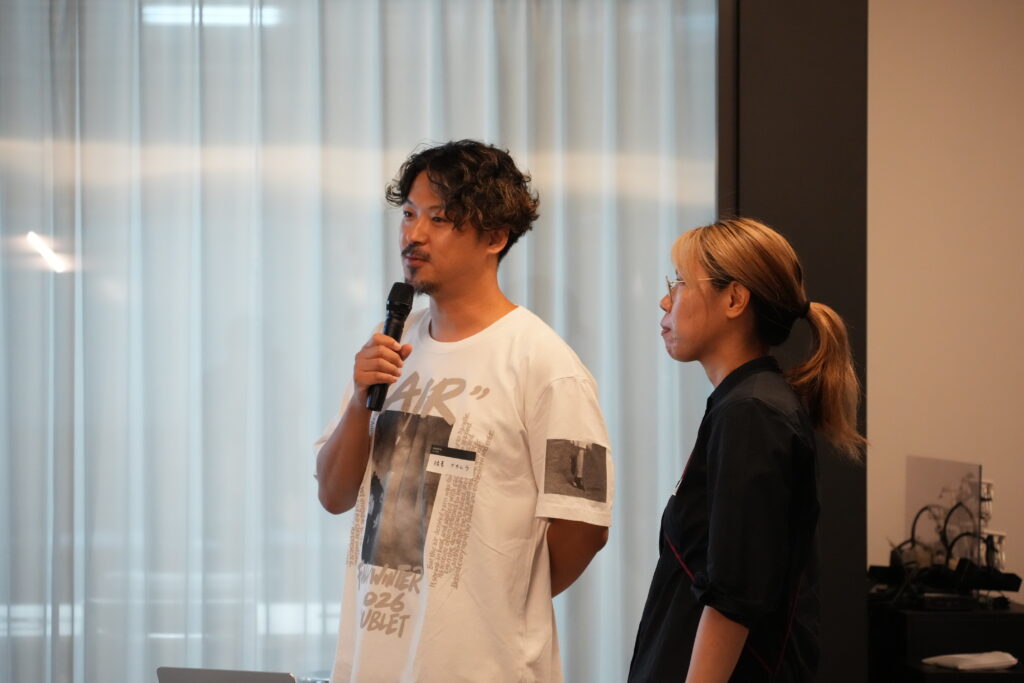
"I hope that everyone can develop a mentor-student relationship with me. Rather than calling me a teacher, I wanted to pass on my way of life and my approach to creativity, so I decided to call them 'Master'."
Not just a teacher, but a master. Not just a technique, but an attitude. The title "Master" reflects that intention.
This word piqued my interest, so I looked it up later.
The word "master" originates from the Latin word "magister." It belongs to the same family as the German "meister" and the French "maître," and originally seems to have referred to a master in an apprenticeship system. English dictionaries clearly distinguish it from "teacher," defining a teacher as "someone who makes teaching their profession," while a master is defined as "someone who has mastered their field and is often able to teach."
Teaching doesn't come first. The attitude of striving to master one's craft comes first.
Furthermore, in that apprenticeship system, the title of "master" is not a permanent one. Apprentices become craftsmen, and craftsmen eventually become masters. It is a title that is based on the premise of change.
Nakamura's words perfectly explained the structure.
"It's unlikely that the number of Masters will suddenly increase to 100 or anything like that. Rather, I hope that the next Master will emerge from among those who have inherited from the current Master. That's my feeling, so please do your best, everyone."
This wouldn't happen in a typical master-disciple relationship. That relationship is fixed. I think that's probably why I decided to call him "Master." It's a rather embarrassing title to use, even for me.
Here's another point I'd like to make.
AI has become capable of replicating a significant portion of the expertise that humans have accumulated over the years—in design, implementation, and project management. However, if there's anything it hasn't yet absorbed, I believe it's the things that haven't been verbalized or systematized. Things like the nuances of conversation, subtle gestures, or the tone of feedback—things even the person themselves can't fully articulate.
I think the only way to deliver it is to do it directly to groups of 10 people.
This was just my own interpretation, but while writing this report, I reread the interview from the start of the course and found the words I had spoken with Utsunomiya-san during the networking time.
I want to deliver skills and knowledge that are difficult to articulate or systematize, skills that are highly personal and unique to each individual.
And there were three conditions for becoming a master.
"Someone who is well-known in the industry," "Someone who publicly shares information on social media and in the media," and " Someone who is eager to learn ."
What I saw at the venue had already been described in an article written more than a year ago.
The students who took charge of the filming
"Okay, let's take a group photo with all the masters!"
A voice was heard from somewhere, and the eight masters, along with Nakamura-san, gathered at the front.
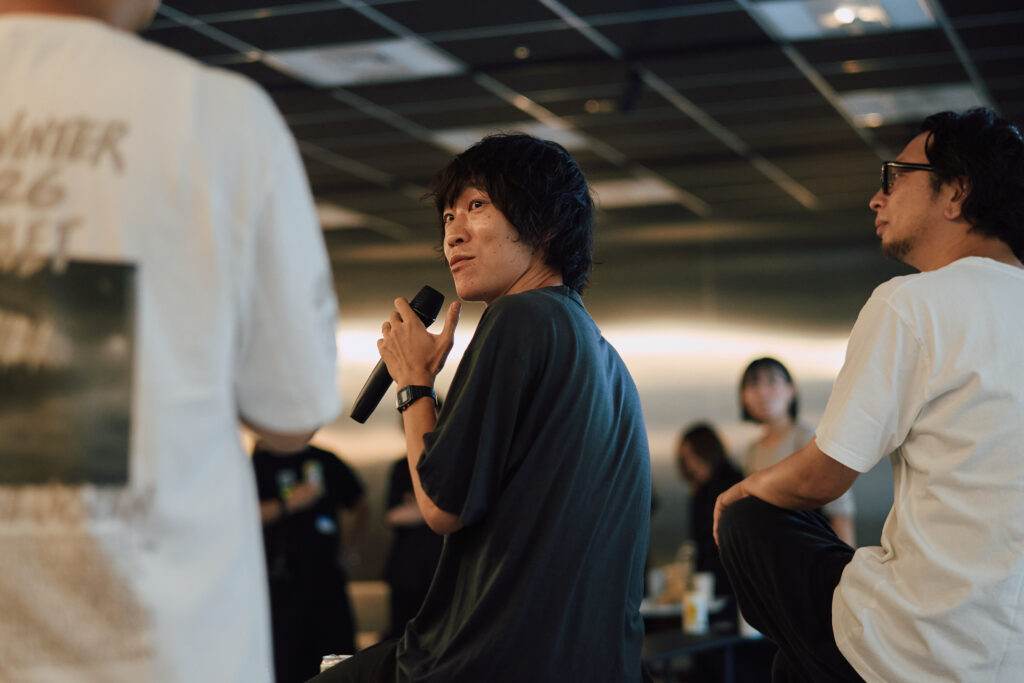
This is where the members of Shuntaro's course stepped in. They were people who had been studying photo direction for three months. Most of the people who were holding cameras all over the venue that day were from this group. The two people that Hara-san said were "too many" at the beginning were also here.
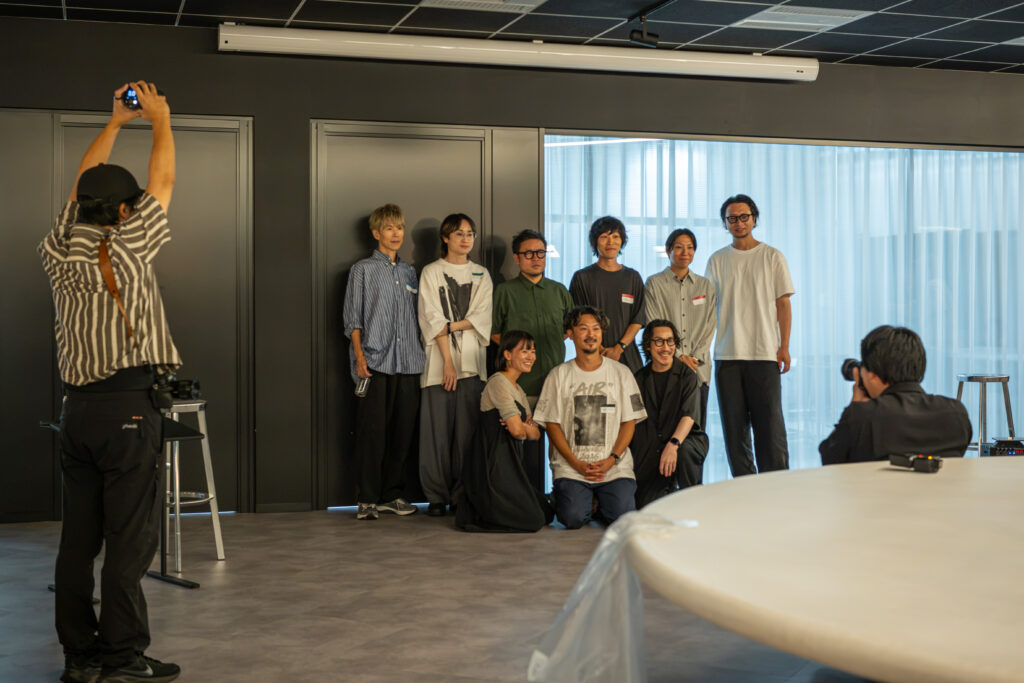
Their division of labor was brilliant. Inoue-san took charge of the microphone and lighting , while Kimura-san was in charge of the camera . Both are active photographers.
"Master, I want to see more smiles!"
Inoue's voice was precise and effective. He guided the participants and raised the energy level of the room with his encouragement. He turned on the lights, did a test shoot, adjusted the settings, and then photographed the masters.
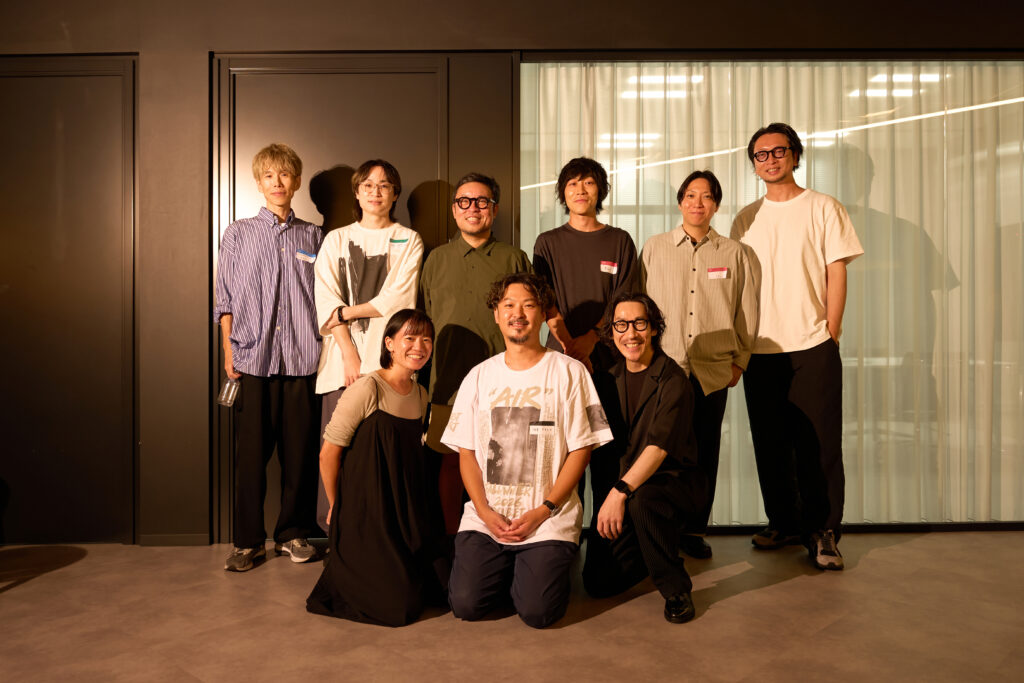
Next, a group photo was taken including the students.
"Okay, tall people, please come to the back. Come on over!"
"You can only fit this far to the side, so please squeeze in here."
"Everyone, teamwork is important. Okay, got it?"
Fitting nearly 50 people into the frame is a skill in itself. Adjusting the angle of view, pointing out empty spaces and filling them in, encouraging those in front to sit down, and getting laughs while keeping the line in order.
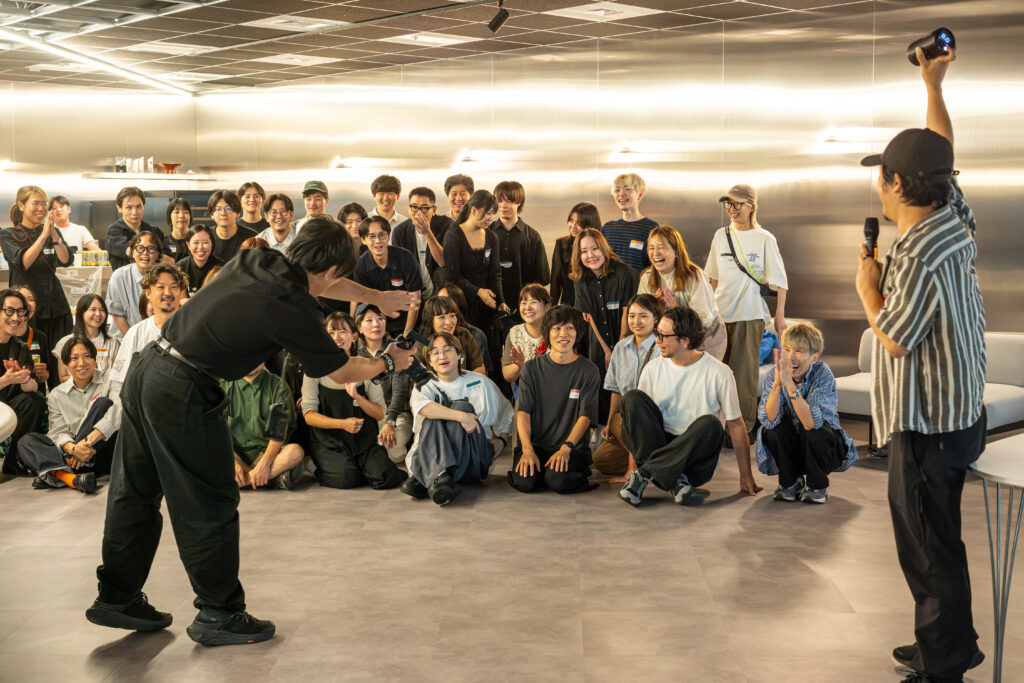
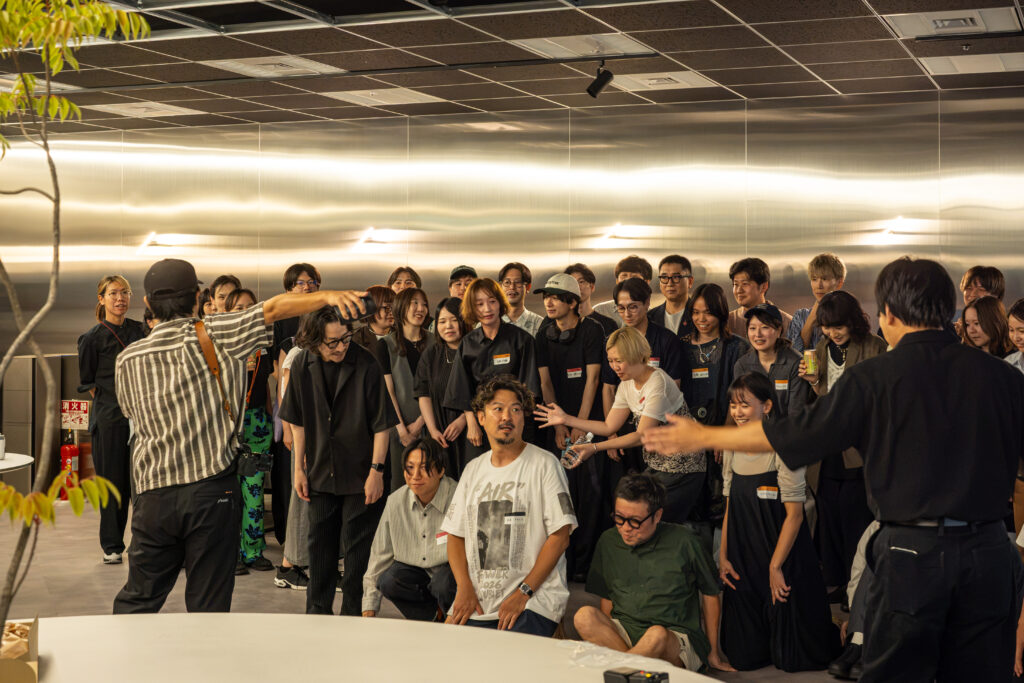
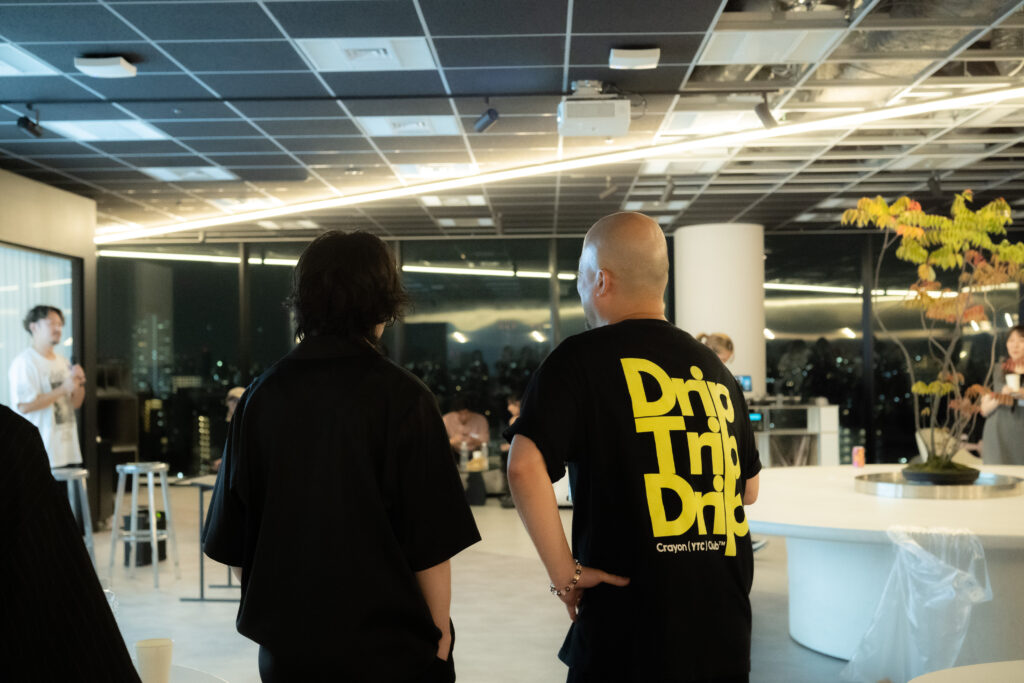
At that moment, I was positioned a little further back. I wanted to photograph them from behind as they were taking pictures.
If you ask me if I wanted to join the group, yes, I did. But even taking pictures of the people taking pictures is still a way of being part of the group. I tried to convince myself of that.
But the view I saw from there was somehow really wonderful.
The master and the students are in the same frame. The principal and the staff are also there. The person taking the picture is someone who was studying with them as a student until recently. They are putting to full use the photographic skills they have cultivated throughout their lives and the relationships they have built over the past three months.
On that day, I captured in fragments what I had seen here and there at the venue—the sense of distance between the master and the students, and the warmth exchanged across courses—all in a single photograph.
It was a moment when I could see the entire structure of CREATIVE CLASS at a glance.
It was only because I was in a detached position that I was able to feel it. I think it was a small luxury that only those who have been given this position can experience.
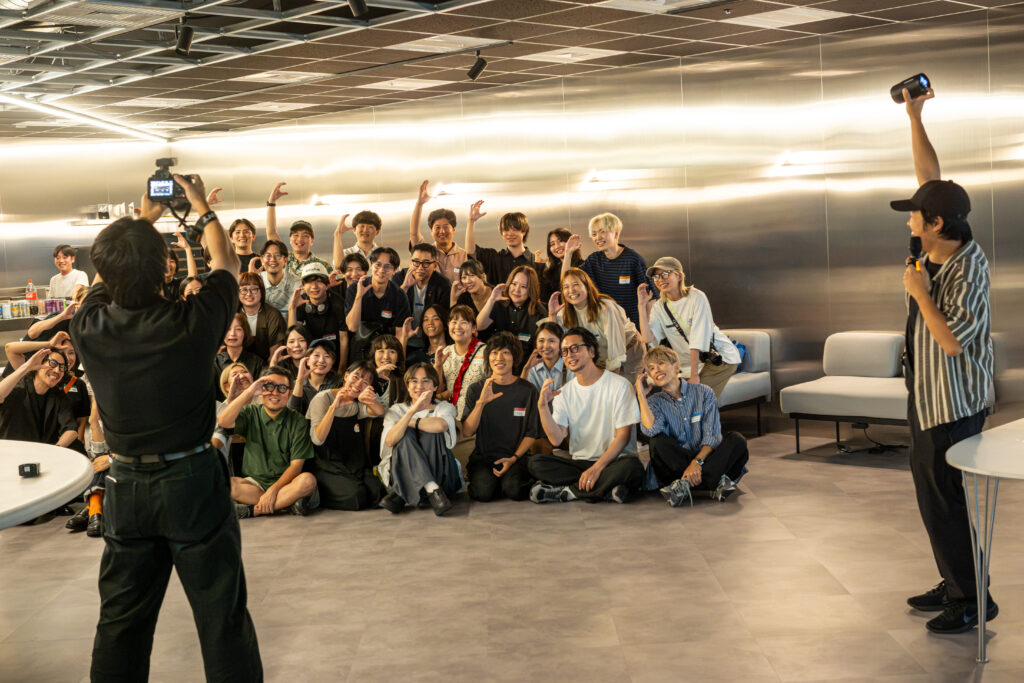
What was there was not a master-disciple relationship.
The gathering continued on to a second party, and I joined later.
I sat next to Mr. Nakano at that meeting and we talked for a bit. The topic was about the fact that I'm still working with one of the students from the course.
"Is it something like a master-apprentice relationship?" I asked.
"No, that's not it," said Nakano.
CREATIVE CLASS is over. It's no longer an extension of the master-student relationship; we're now working together as production partners, with proper compensation paid. In this new relationship, we're passing on skills and ways of thinking.
Certainly, they are not master and apprentice.
I think I was looking at the same thing all day.
Utsunomiya said he wanted to improve his small talk skills, and Noda walked for three hours while considering the intentions behind the participants' words. Nakagawa said it was a learning experience for him, and Hara said he kept agonizing over what to give them. Nakano said he was too affectionate, and Okabe said he was constantly trying to gauge the right distance. Kodama acted as both master and participant, and Tabuchi mentioned accompanying them after the course was over.
And the students weren't just passively receiving instruction. For three months, they grappled with assignments, absorbed feedback, and learned from the struggles of other students. These people, who had spent such intense time together, were meeting face-to-face for the first time that day.
The atmosphere in the venue wasn't the exhilaration of meeting someone you admire, but something much closer. It was the camaraderie of people who had climbed the same mountain together.
One student wrote the following in their feedback:
I felt a sense of relief and encouragement when I realized that even those students I admired, and even the masters, were struggling and taking things one step at a time, just like us.
Another student wrote the following about their current position:
Personally, I haven't yet been able to put what I learned in the Creative Class into practice, so I'm still stuck in the school building like a cursed ghost who hasn't graduated yet.
A vengeful spirit, huh?
But these are words born from the frustration of having faced the situation with such genuine intensity. And I suspect that he's not the only one still remaining in the school building.
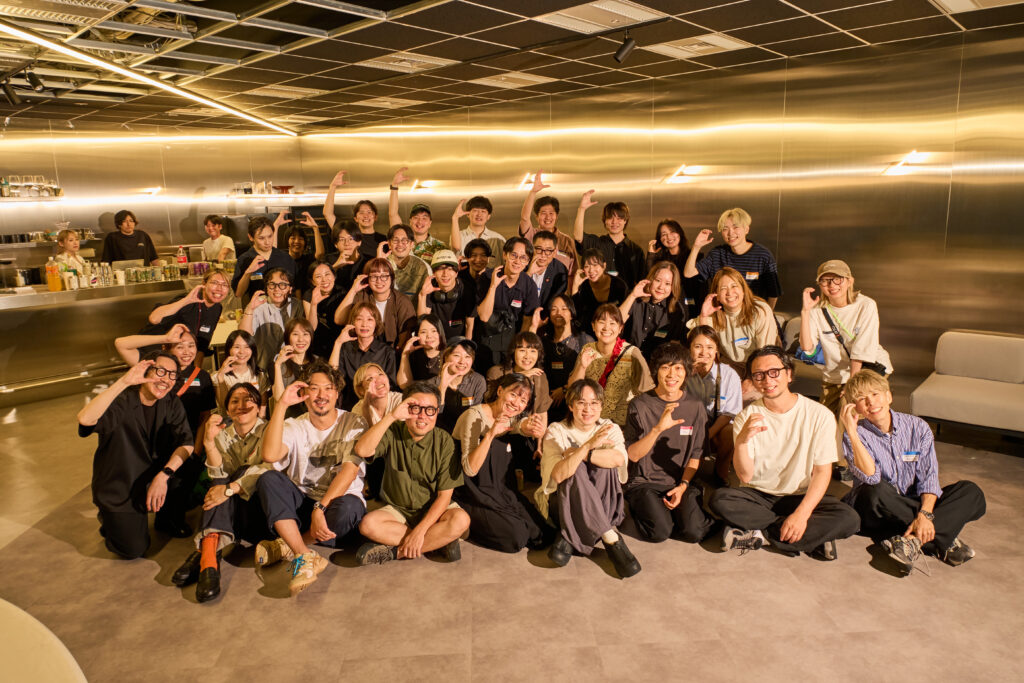
The term "master" is a designation that implies change and shifts.
Some are a little ahead, others are climbing up behind. Their order may be different, but their goal is the same. Everyone is striving to climb the steep mountain and reach its peak.
The image I had in mind before heading to the venue—"the day I'm going to meet the person I admire"—was a little different from what I expected.
Perhaps it was a day when I reconnected with fellow comrades who continue to struggle.
CREATIVE CLASS will continue.


